What Polish to Use on Boats? A Complete Selection Guide
Choosing the right boat polish depends on your gelcoat condition and environment. What polish to use on boats? depends on these factors.
- Understanding Marine Polish Types
- What to Look for in Boat Polish: What polish to use on boats?
- Polish Selection by Surface Condition: What Polish to Use on Boats?
- Top Marine Polish Characteristics: What Polish to Use on Boats?
- Machine Polish vs Hand Polish Products: What Polish to Use on Boats?
- Polish Selection for Different Boat Types: What Polish to Use on Boats?
- Polish for Ceramic Coating Preparation
- Polish Before Marine Protection Film: What Polish to Use on Boats?
- Common Polish Selection Mistakes
- Polish and Pad Combinations
- Florida-Specific Polish Considerations: What Polish to Use on Boats?
- Professional vs Consumer Polish Products
- How to Test Polish Before Full Application
- Polish Selection Checklist
- Integration with Complete Detailing: What Polish to Use on Boats?
- Long-Term Polish Strategy: What Polish to Use on Boats?
- FAQ - What polish to use on boats?
- Key Takeaways – What Polish to Use on Boats?
- Conclusion: What Is the Best Polish to Use on Boats?
The right boat polish removes oxidation, restores clarity, and prepares surfaces for protection. In harsh marine environments like Florida, What polish to use on boats? based on surface condition, abrasiveness level, and intended finish determines whether you restore your boat’s appearance or cause long-term damage. Knowing polish types, proper application methods, and how they integrate with ceramic coatings and Marine Protection Film like Yacht Armor™ is essential for effective marine care.
Understanding Marine Polish Types
Different polishes serve different purposes in the restoration process.
Polish Categories by Function
Finishing Polish
- Purpose: Final gloss refinement
- Abrasiveness: Very low
- Best for: New gelcoat, pre-coating prep
- Results: Maximum clarity and shine
Medium-Cut Polish
- Purpose: Light oxidation removal
- Abrasiveness: Moderate
- Best for: Annual maintenance, surface revival
- Results: Restored gloss, smooth feel
Heavy-Cut Polish
- Purpose: Oxidation correction
- Abrasiveness: High (borderline compound)
- Best for: Neglected surfaces, pre-restoration
- Results: Significant defect removal
The key is matching polish aggression to surface needs—using too aggressive a polish removes unnecessary gelcoat.
What to Look for in Boat Polish: What polish to use on boats?
Marine-specific formulations outperform automotive products in saltwater environments.
Critical Selection Criteria
Marine-Grade Chemistry
- Salt-resistant formulas
- UV-stable ingredients
- Won’t streak in humidity
- Rinses clean with saltwater
Abrasive Technology
- Diminishing abrasives preferred
- Uniform particle size
- Breaks down during use
- Prevents surface gouging
Application Compatibility
- Works with machine or hand
- Doesn’t dry too quickly in sun
- Easy wipe-off
- Minimal dusting
Avoid automotive polishes—they’re formulated for paint, not porous gelcoat.
Polish Selection by Surface Condition: What Polish to Use on Boats?
Your boat’s current state determines which product you need.
Surface Assessment Guide
| Condition | Visual Signs | Polish Type | Typical Product |
|---|---|---|---|
| Excellent | Full gloss, smooth feel | Finishing polish | Ultra-fine marine polish |
| Good | Slight haze, minor dullness | Light cut polish | All-in-one marine polish |
| Fair | Visible oxidation, chalky | Medium cut polish | Restoring marine polish |
| Poor | Heavy chalking, rough texture | Heavy cut or compound first | Aggressive oxidation remover |
Starting with the least aggressive polish that achieves results preserves gelcoat thickness.
Top Marine Polish Characteristics: What Polish to Use on Boats?
Professional-grade products share common features.
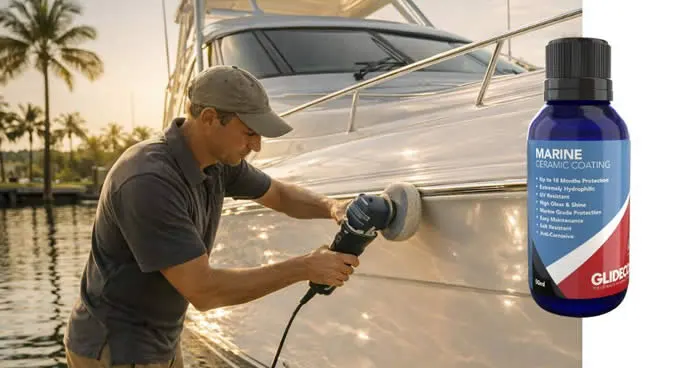
What Sets Quality Marine Polish Apart
Performance Features
- Removes swirl marks effectively
- Creates uniform surface texture
- Enhances color depth
- Prepares for protection
Working Properties
- Extended work time in heat
- Minimal splatter during use
- Clear visual indication when complete
- Low dust generation
Protection Compatibility
- Silicone-free options available
- Bonds well with ceramic coatings
- Won’t interfere with Marine Protection Film adhesion
- Clean surface left behind
Quality polish makes protective products perform as designed.
Machine Polish vs Hand Polish Products: What Polish to Use on Boats?
Different application methods require different formulations.
Application Method Comparison
Machine Polishing
- Uses faster-breaking abrasives
- Requires proper pad selection
- More consistent results
- Better for large areas
- Professional standard for detailing
Hand Polishing
- Uses slower-breaking abrasives
- Works with applicator pads
- More control in tight spaces
- Time-intensive on large boats
- Better for spot corrections
Most boat detailing services in Florida use machine polishing for uniform results.

Polish Selection for Different Boat Types: What Polish to Use on Boats?
Vessel size and material affect product choice.
Boat-Specific Considerations
Center Consoles & Bay Boats
- High UV exposure areas
- Frequent saltwater contact
- Medium-cut polish typically needed
- Annual polishing recommended
Sport Fishing Boats
- Large surface areas
- Cockpit oxidation common
- Machine application preferred
- Multiple polish grades often used
Luxury Yachts
- Premium finish expectations
- Multi-stage polishing normal
- Finishing polish essential before Yacht Armor™
- Professional detailing standard
Larger vessels benefit most from professional boat detailing services with industrial equipment.

Polish for Ceramic Coating Preparation
Ceramic coatings demand specific surface preparation. What polish to use on boats? plays a key role in achieving proper results.
Pre-Coating Polish Requirements
Why Polish Quality Matters
- Coating magnifies surface defects
- Poor prep causes coating failure
- Residue prevents proper bonding
- Affects coating longevity
Ideal Pre-Coating Polish
- Zero fillers or oils
- Complete abrasive breakdown
- Leaves chemically clean surface
- Compatible with coating chemistry
Professional detailing ensures correct polish selection before ceramic application.
Polish Before Marine Protection Film: What Polish to Use on Boats?
Yacht Armor™ and similar films require flawless surface prep.
Film Installation Polish Standards
Critical Preparation Steps
- Remove all oxidation completely
- Polish to optical clarity
- Eliminate embedded contaminants
- Achieve uniform surface texture
Why Film Demands Perfect Polish
- Film shows every surface defect
- Trapped imperfections permanent
- Poor prep causes edge lifting
- Affects film optical properties
Reputable installers won’t apply Marine Protection Film without proper polishing, which highlights What polish to use on boats? as a critical factor for proper surface preparation.
Common Polish Selection Mistakes
Wrong product choice causes preventable damage.
Errors to Avoid
Using Automotive Polish
- Wrong chemistry for gelcoat
- May contain ingredients that repel marine coatings
- Doesn’t handle salt exposure
- Can accelerate oxidation
Choosing by Price Alone
- Cheap polish often too aggressive
- May contain excess fillers
- Results don’t last
- Can require more frequent reapplication
Ignoring Abrasive Level
- Over-polishing removes gelcoat
- Under-polishing wastes time
- Wrong grade damages surface
- Affects protection adhesion
Professional boat detailing services select products based on surface analysis, not shelf price.
Polish and Pad Combinations
The applicator matters as much as the product.
Matching Polish to Pads
Foam Pad Types
- Cutting pad: Heavy oxidation removal
- Polishing pad: Medium correction
- Finishing pad: Final gloss enhancement
- Soft foam: Hand application
Application Principles
- Aggressive polish + soft pad = safe correction
- Mild polish + cutting pad = moderate correction
- Match pad to desired outcome
- Change pads frequently
Wrong combinations either damage surfaces or produce poor results. What polish to use on boats? determines the outcome.
Florida-Specific Polish Considerations: What Polish to Use on Boats?
Coastal environments demand adapted approaches.
Marine Climate Factors
Environmental Challenges
- Intense UV year-round
- High humidity affects application
- Salt accelerates oxidation
- Boats need more frequent polishing
Selection Adjustments
- Choose heat-stable formulas
- Avoid products that haze in humidity
- Select quick-drying options
- Prefer salt-resistant chemistry
Boat detailing services in Florida use regionally-tested products.
Professional vs Consumer Polish Products
Commercial-grade polish offers advantages.
Product Tier Differences
Consumer Products
- Available at marine stores
- Moderate abrasive technology
- General-purpose formulas
- Good for maintenance
Professional Products
- Distributor or detail shop only
- Advanced abrasive systems
- Surface-specific formulations
- Used by boat detailing services
Performance Gap
- Professionals achieve better gloss
- More efficient correction
- Longer-lasting results
- Better prep for protection
For boats receiving ceramic coating or Yacht Armor™, professional-grade polish is worth the investment.
How to Test Polish Before Full Application
Always verify product performance first.
Smart Testing Process
- Select inconspicuous test area
- Clean thoroughly
- Apply small amount of polish
- Work according to instructions
- Evaluate results: gloss, clarity, ease of use
- Check for residue or hazing
- Verify easy removal
Testing prevents committing to wrong product on entire boat.
Polish Selection Checklist
Use this guide when choosing marine polish.
Decision Framework
Surface Assessment
- What’s the current gloss level?
- Is oxidation visible?
- Are there swirl marks?
- What’s the texture like?
Goal Definition
- Maintenance or restoration?
- Preparing for protection?
- DIY or professional application?
- What’s the timeline?
Product Evaluation
- Marine-specific formula?
- Appropriate abrasive level?
- Compatible with next steps?
- Reputable brand?
Answering these questions narrows the selection significantly.
Integration with Complete Detailing: What Polish to Use on Boats?
Polish works best within full service workflow.
Professional Detailing Process
- Decontamination wash – Remove salt, grime
- Surface evaluation – Assess condition
- Compounding (if needed) – Heavy correction
- Polishing – Refinement and gloss
- Protection application – Ceramic or film
- Final inspection – Quality verification
Boat detailing services in Florida follow this sequence for consistent results. What polish to use on boats? is part of that process.
When Polish Alone Isn’t Enough
Some situations require different approaches.
Beyond Polishing
Heavy Oxidation
- Compound first, then polish
- May need wet sanding
- Multiple stages required
- Professional help recommended
Gelcoat Damage
- Polish won’t fix cracks
- Deep scratches need repair
- Color fade may need painting
- Structural issues need assessment
Understanding polish limitations prevents unrealistic expectations.
Long-Term Polish Strategy: What Polish to Use on Boats?
Smart selection reduces future maintenance needs.
Protection-First Approach
Optimal Sequence
- Correct surface condition properly
- Apply high-quality protection
- Maintain protection regularly
- Polish only when necessary
Result
- Less frequent polishing needed
- Gelcoat preserved longer
- Lower long-term costs
- Better appearance retention
Ceramic coatings and Marine Protection Film dramatically extend time between polishing.
FAQ – What polish to use on boats?
Medium to heavy-cut marine polish designed for oxidation removal, followed by finishing polish for gloss.
Not recommended. Marine polish is formulated for gelcoat porosity and saltwater exposure.
Use filler-free finishing polish that leaves a chemically clean surface for proper coating bonding.
Ultra-fine finishing polish that achieves optical clarity without residue or surface defects.
No. Different areas may need different abrasiveness levels based on sun exposure and condition.
With proper protection, annually. Without protection, every 6-12 months depending on exposure.
Not always, but professional-grade products typically outperform consumer options for durability and finish quality.
Key Takeaways – What Polish to Use on Boats?
- Match polish abrasiveness to actual surface condition
- Marine-specific formulas outperform automotive products
- Pre-coating prep requires filler-free finishing polish
- Professional products deliver superior results
- Testing prevents costly mistakes
- Protection reduces polishing frequency
- Florida conditions demand adapted product selection
Conclusion: What Is the Best Polish to Use on Boats?
Choosing the right boat polish is matching product chemistry and abrasiveness to your boat’s condition, your protection goals, and your environment. In demanding marine climates like Florida, What polish to use on boats? determines whether your gelcoat stays protected or deteriorates prematurely.
Whether you’re preparing for ceramic coating application, Marine Protection Film installation, or simply maintaining your vessel’s appearance, using marine-grade polish matched to surface needs delivers results that last. For boats requiring professional-level finish or preparing for premium protection like Yacht Armor™, working with experienced boat detailing services ensures the right products are used correctly.
Need help selecting the right polish for your boat’s condition?
👉 Click Here to Schedule a Professional Surface Assessment & Detailing Consultation Today.