What Polish to Use on Boats? A Complete Selection Guide
Marine coatings protect vessels from harsh marine conditions, extending their lifespan and performance.
- Introduction: What Is the Purpose of Marine Coatings?
- What Are Marine Coatings?
- The Core Purpose of Marine Coatings
- How Fouling-Prevention Coatings Work: What Is the Purpose of Marine Coatings
- Types of Marine Coatings
- Marine Coatings vs Industrial and Marine Coatings
- Ceramic Marine Coatings Explained: What Is the Purpose of Marine Coatings
- How Marine Coatings Fit Into Boat Maintenance
- How Much Is Ceramic Coating for Marine Use? (Contextual, Not Pricing)
- Real-World Example: What Is the Purpose of Marine Coatings
- Common Misconceptions About Marine Coatings
- FAQ: What Is the Purpose of Marine Coatings?
- Key Takeaways: What Is the Purpose of Marine Coatings
- Conclusion: What Is the Purpose of Marine Coatings
- What Is the Purpose of Marine Coatings? Expert Advice
The purpose of marine coatings is to protect vessels and marine structures from corrosion, fouling, UV damage, and environmental wear while improving performance, longevity, and maintenance efficiency.
Marine coatings create a protective barrier that shields surfaces from saltwater, biological growth, and chemical exposure, making them essential for boats, ships, and offshore structures.
Introduction: What Is the Purpose of Marine Coatings?
Marine environments are among the most aggressive conditions any surface can face. Constant exposure to saltwater, UV radiation, biological growth, chemicals, and abrasion places enormous stress on boats, ships, and offshore structures. This is why marine coatings exist—and why they play such a critical role in vessel protection, performance, and long-term cost control.
If you’ve ever wondered what the purpose of marine coatings is, this article explains it clearly and practically. We’ll cover how marine coatings work, the different types of marine coatings, how they differ from industrial coatings, and why solutions like marine coatings for fouling prevention and ceramic marine coatings are increasingly used on modern boats. By the end, you’ll understand how coatings fit into real-world maintenance decisions—from routine boat wash and cleaning services to long-term protection strategies.
What Are Marine Coatings?
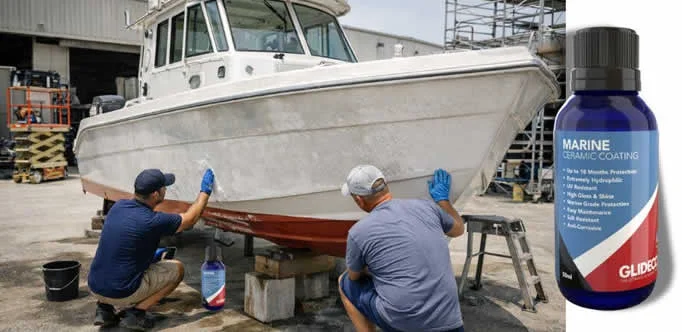
Marine coatings are specialized protective layers applied to boats and marine structures to prevent corrosion, fouling, UV damage, and surface degradation in saltwater environments.
Clear Definition
Marine coatings are engineered formulations—such as paints, films, or ceramic layers—designed specifically for use in marine conditions. Unlike standard paints or sealants, they must withstand:
- Continuous saltwater exposure
- High humidity
- Intense UV radiation
- Abrasion and impact
- Chemical contact (fuel, oil, cleaning agents)
Their purpose is not only aesthetic but fundamentally protective and functional.
The Core Purpose of Marine Coatings
The primary purpose of marine coatings is to protect surfaces from environmental damage while improving durability, performance, and ease of maintenance.
Marine coatings serve five essential functions:
- Corrosion protection
- Fouling prevention
- UV and weather resistance
- Surface durability and longevity
- Maintenance and cost reduction
Each function addresses a specific threat faced by marine vessels.
1. Corrosion Protection
Marine coatings protect metal and composite surfaces from corrosion caused by saltwater and oxygen.
Saltwater is highly corrosive. Without coatings:
- Metals oxidize rapidly
- Fasteners weaken
- Structural integrity is compromised
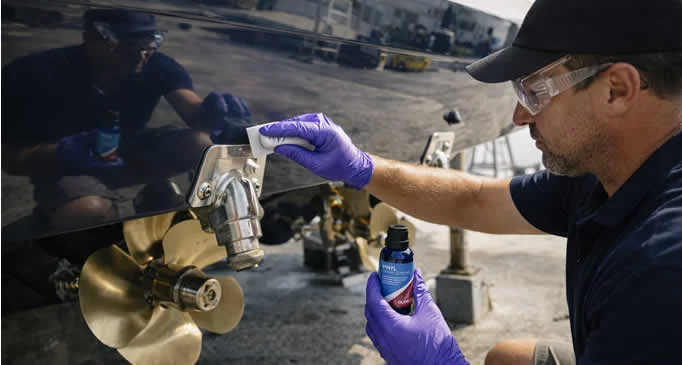
Marine coatings form a barrier that isolates the surface from moisture and oxygen, dramatically slowing corrosion processes. This is critical for hulls, drives, propellers, and underwater hardware.
2. Fouling Prevention
Marine coatings for fouling prevention stop marine organisms from attaching to underwater surfaces.
What Is Fouling?
Fouling occurs when algae, barnacles, and microorganisms attach to a vessel’s hull. This leads to:
- Reduced speed
- Increased fuel consumption
- Higher cleaning costs
How Fouling-Prevention Coatings Work: What Is the Purpose of Marine Coatings
These coatings create surfaces that:
- Discourage organism adhesion
- Release growth more easily during movement
- Reduce the need for aggressive hull cleaning
Fouling-prevention coatings are essential for boats stored in water long-term.
3. UV and Weather Protection
Marine coatings protect surfaces from UV radiation, oxidation, and weather-related degradation.
UV exposure breaks down gelcoat, paint, and plastics over time. Marine coatings:
- Reflect or absorb UV radiation
- Slow oxidation and fading
- Preserve color and gloss
This is especially important in sunny regions where boats are exposed year-round.
4. Surface Durability and Wear Resistance
Marine coatings enhance surface strength and resistance to abrasion, impact, and chemical exposure.
Boats are exposed to:
- Dock contact
- Foot traffic
- Fuel spills
- Cleaning chemicals
Protective marine coatings reduce surface wear, extending the lifespan of gelcoat, paint, and metals.
5. Easier Cleaning and Maintenance
Marine coatings reduce how often and how aggressively surfaces need to be cleaned.
Coated surfaces:
- Resist dirt and staining
- Reduce water spotting
- Make routine boat wash faster and easier
This lowers dependence on harsh chemicals and frequent professional boat cleaning services.
Types of Marine Coatings
Different marine coatings serve different purposes depending on exposure, location, and vessel use.
Anti-Fouling Marine Coatings
Designed for underwater surfaces to prevent biological growth.
Best for: Hull bottoms, running gear
Primary benefit: Fouling prevention
Protective Marine Paint Systems
Multi-layer paint systems for corrosion and environmental resistance.
Best for: Steel and aluminum vessels
Primary benefit: Structural protection
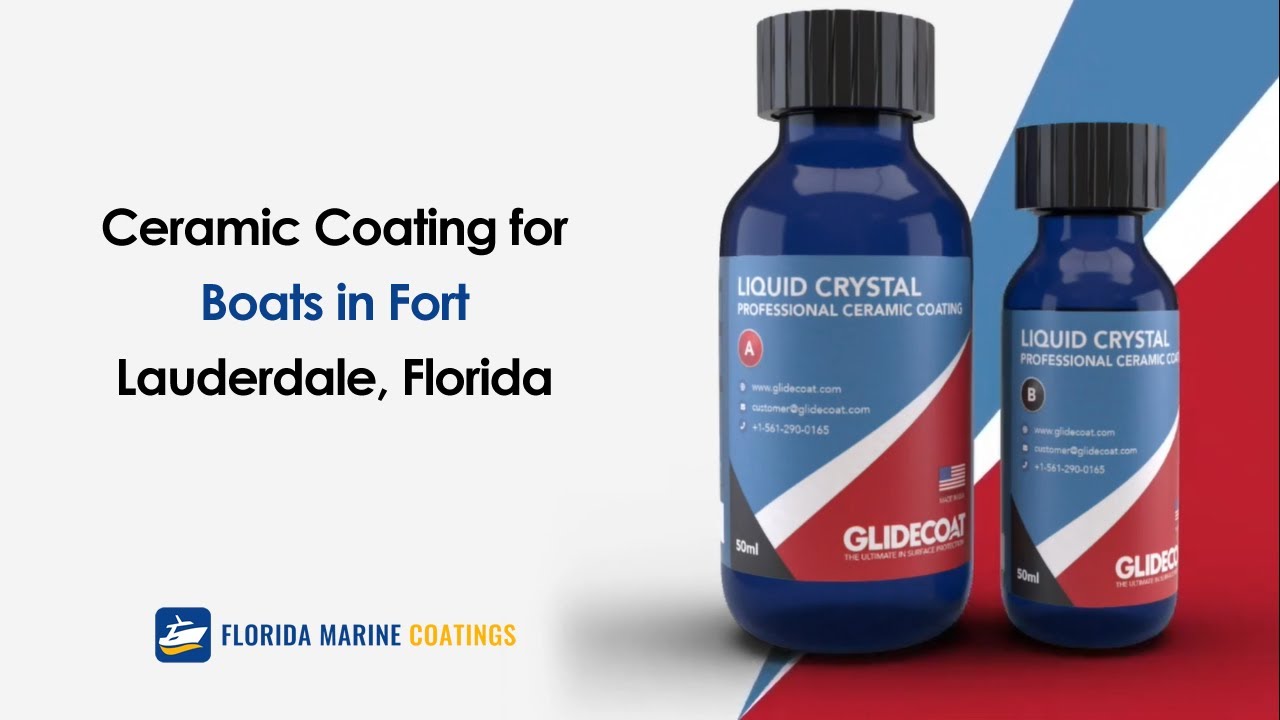
Marine Ceramic Coatings
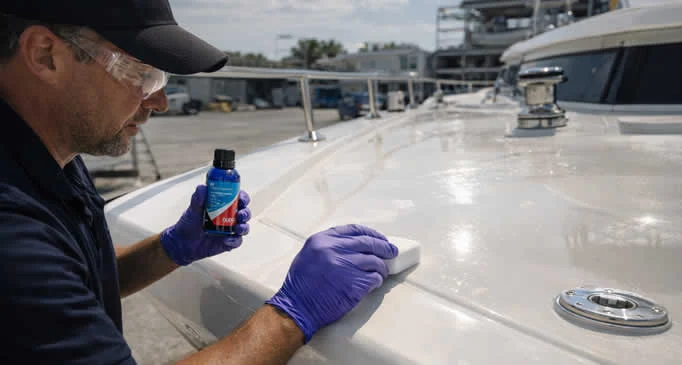
Advanced coatings that bond to surfaces to enhance gloss, UV resistance, and hydrophobic behavior.
Best for: Hulls, topsides, glass, metal
Primary benefit: Maintenance reduction and appearance preservation
Marine Protection Films
Physical films applied to high-impact or high-wear areas.
Best for: Bows, hull sides, high-traffic zones
Primary benefit: Impact and abrasion resistance
Marine Coatings vs Industrial and Marine Coatings
Industrial and marine coatings differ in formulation, flexibility, and exposure tolerance.
| Feature | Industrial Coatings | Marine Coatings |
|---|---|---|
| Saltwater resistance | Limited | High |
| UV exposure tolerance | Moderate | High |
| Flexibility | Low | High |
| Fouling protection | No | Yes |
| Marine certification | No | Yes |
Using industrial coatings in marine environments often leads to premature failure.
Ceramic Marine Coatings Explained: What Is the Purpose of Marine Coatings
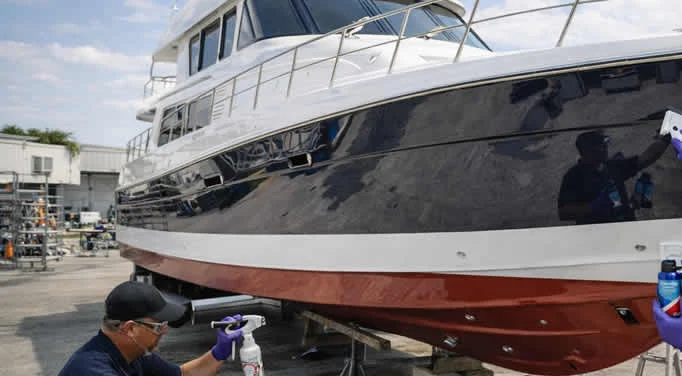
Ceramic marine coatings provide a bonded protective layer that enhances gloss, UV resistance, and ease of cleaning.
What They Do
- Create a hydrophobic surface
- Reduce oxidation
- Improve surface smoothness
What They Don’t Do
- They are not impact barriers
- They do not replace anti-fouling coatings underwater
Ceramic coatings are ideal for above-water surfaces and are commonly applied after surface correction.
How Marine Coatings Fit Into Boat Maintenance
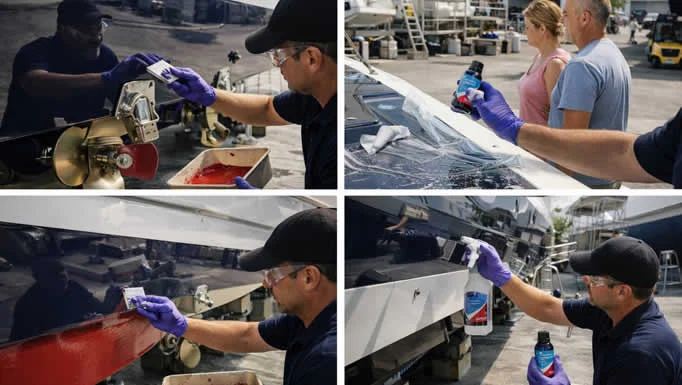
Marine coatings work best as part of a complete maintenance strategy.
Typical maintenance flow:
- Boat wash and decontamination
- Surface inspection and correction
- Marine coating application
- Ongoing cleaning and inspections
Skipping preparation reduces coating performance and lifespan.
How Much Is Ceramic Coating for Marine Use? (Contextual, Not Pricing)
The cost of ceramic marine coatings depends on vessel size, surface condition, and preparation requirements rather than a fixed rate.
Factors that influence ceramic coating investment:
- Surface correction needed
- Type of coating used
- Areas being coated
- Environmental exposure
Proper preparation matters more than the coating itself.
Real-World Example: What Is the Purpose of Marine Coatings
Scenario
A boat stored in water year-round without protective coatings.
Result
- Heavy fouling
- Accelerated oxidation
- Frequent hull cleaning required
Solution
After applying appropriate marine coatings:
- Fouling growth slowed
- Cleaning frequency reduced
- Surface condition stabilized
This demonstrates the long-term value of proper coatings.
Common Misconceptions About Marine Coatings
Marine coatings are often misunderstood as purely cosmetic.
Common myths:
- “Coatings are just for shine”
- “Any coating works in marine environments”
- “You can skip prep”
In reality, coatings are technical protection systems.
FAQ: What Is the Purpose of Marine Coatings?
To protect marine surfaces from corrosion, fouling, UV damage, and wear.
Yes. All boats benefit from protective coatings, though type and scope vary.
Anti-fouling coatings are specifically designed to prevent biological growth.
They reduce oxidation, improve gloss, and make cleaning easier.
Yes. Coated surfaces require less aggressive and less frequent cleaning.
Not recommended. Marine coatings are formulated specifically for saltwater conditions.
Key Takeaways: What Is the Purpose of Marine Coatings
- Marine coatings protect against corrosion and fouling
- They extend surface lifespan and reduce maintenance
- Different types serve different marine functions
- Ceramic coatings improve appearance and cleaning efficiency
- Fouling prevention coatings improve performance
- Proper preparation is critical for coating success
Conclusion: What Is the Purpose of Marine Coatings
So, what is the purpose of marine coatings? Simply put, they protect boats and marine structures from the harsh realities of saltwater environments while reducing maintenance demands and preserving long-term value. From fouling prevention and corrosion resistance to advanced ceramic marine coatings, these systems are essential tools—not optional upgrades—for responsible boat ownership.
Understanding the role of marine coatings allows owners to make informed decisions that prevent damage instead of reacting to it later.
What Is the Purpose of Marine Coatings? Expert Advice
If you’re considering marine coatings, ceramic protection, or professional boat cleaning services, 👉 Call Us at: 954 8069934 to get in touch with a specialist who can evaluate your vessel and recommend the right coating strategy for your environment and usage.