What Products Are Needed for Boat Detailing?
Boat detailing includes pH-neutral washing, oxidation polishing, protective coatings, and marine-safe interior cleaners matched to surfaces.
- Introduction: What products are needed for boat detailing?
- Boat Detailing Products List
- Best Boat Soap For Detailing
- Boat Polishing Compound
- Yacht Armor Marine Protection Film
- Boat Interior Detailing Products
- Professional Product Setup vs DIY Kits
- FAQs: What products are needed for boat detailing?
- Key Takeaways: What products are needed for boat detailing?
- What Products Are Needed for Boat Detailing? Get the Free Guide
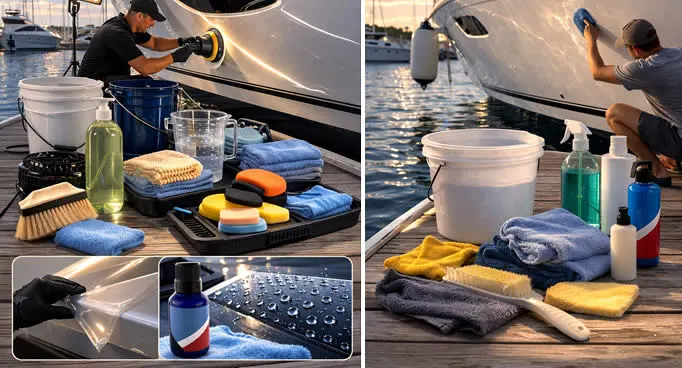
The products needed for boat detailing include a pH-neutral boat soap, dedicated brushes and microfiber towels, a decontamination step (as needed), a polishing system for oxidation, and a protective layer such as wax, sealant, or a marine ceramic coating. For interiors, you’ll want marine-safe cleaners and UV protectants matched to vinyl, leather, and plastics. The best kit is the one that matches your boat’s surfaces and your storage conditions (saltwater, sun, and frequency of use).
Introduction: What products are needed for boat detailing?
If you’re asking what products are needed for boat detailing, you’re likely trying to avoid two things: damaging your boat or wasting money on unnecessary chemicals. Boat detailing isn’t about buying random bottles — it’s about following a structured system: clean safely, correct surface defects, and protect the finish for long-term durability.
Marine environments accelerate oxidation, corrosion, and UV damage. That means your detailing products must be marine-safe and surface-specific.
In this guide, you’ll get a professional-grade checklist covering exterior, interior, correction, and advanced protection systems.
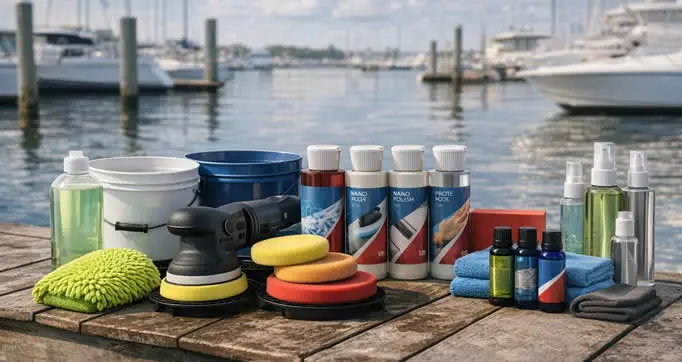
Boat Detailing Products List
A complete boat detailing products list includes cleaning agents, correction products, protective coatings, surface-specific tools, and interior-safe treatments. Skipping one stage reduces results and longevity.
Core Product Categories
1. Wash & Decontaminate
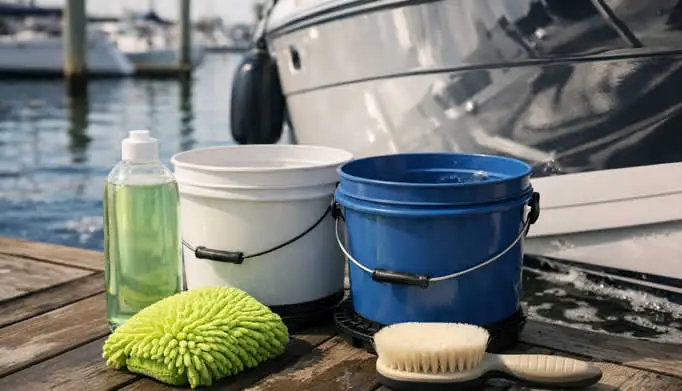
- pH-neutral boat soap
- Two buckets with grit guards
- Microfiber wash mitt
- Non-skid deck cleaner
- Dedicated deck brush
- Waterline stain remover (spot use only)
- Marine-safe glass cleaner
2. Correction Products
- Oxidation remover
- Boat polishing compound
- Finishing polish
- Dual-action polisher
- Cutting and polishing pads
3. Protection Products
- Marine wax
- Polymer sealant
- Boat ceramic coating system
- Maintenance spray
4. Interior & Metal Care
- Marine vinyl cleaner
- UV protectant
- Stainless steel polish
- Ammonia-free plastic cleaner
Best Boat Soap For Detailing
The best boat soap for detailing is pH-neutral and marine-formulated so it removes salt and grime without stripping protection layers. Harsh household detergents can shorten the life of wax and ceramic coatings.
Why pH-neutral matters
Salt residue and UV exposure already stress gelcoat. A neutral soap preserves protective layers while maintaining lubrication to reduce wash-induced swirl marks.
Avoid:
- Degreasers as primary wash soap
- Dish soap (strips protection)
- Single brush for gelcoat and non-skid
Professional marinas increasingly recommend biodegradable, phosphate-free soaps to reduce runoff impact. (Michigan Clean Marina Program)
Boat Polishing Compound
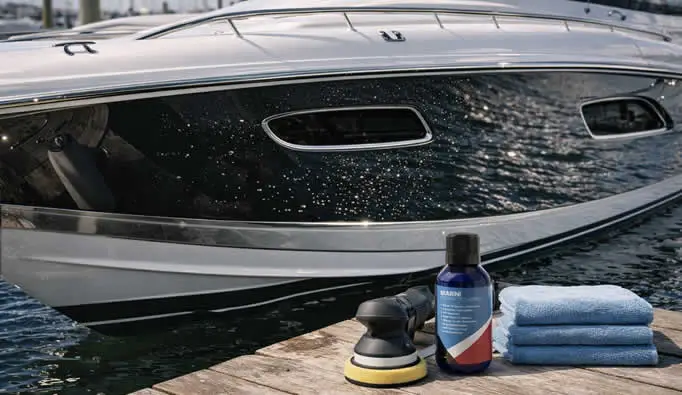
A boat polishing compound removes oxidation and restores gloss before any protection is applied. If your hull feels chalky or looks faded, polishing is required.
When to use compound:
- Visible oxidation
- Chalky residue on wipe-down
- Uneven gloss
Process:
- Wash thoroughly
- Test spot
- Compound with proper pad
- Polish to refine
- Apply protection
Skipping correction and jumping to wax locks in dullness.
Yacht Armor Marine Protection Film
Yacht Armor Marine protection Film is a transparent polyurethane barrier designed to protect high-impact areas from abrasion, dock rash, and fishing gear damage. Unlike coatings, it provides physical impact resistance.
Ideal Applications:
- Gunwales
- Hull sides
- Cockpit high-traffic zones
- Transom corners

Film vs Coating
| Feature | Marine Protection Film | Ceramic Coating |
|---|---|---|
| Protection Type | Physical barrier | Chemical surface bond |
| Scratch Resistance | High impact | Minor resistance |
| UV Protection | Yes | Yes |
| Best For | Contact areas | Full surface gloss & ease of wash |
Film protects against abrasion. Coatings enhance cleanability.
Glidecoat
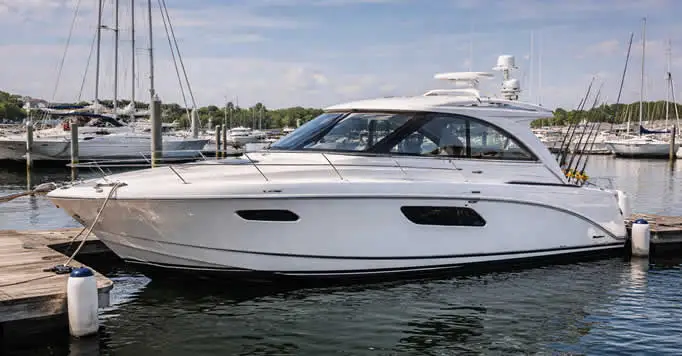
Glidecoat is a professional marine ceramic coating system engineered to enhance gloss, hydrophobic performance, and UV resistance in saltwater environments.
Benefits:
- High-gloss finish
- Water-beading effect
- Reduced salt adhesion
- Easier maintenance
- Slower oxidation
Application Order:
- Wash
- Correct oxidation
- Polish
- Apply Glidecoat
Glidecoat vs Wax
| Feature | Wax | Glidecoat |
|---|---|---|
| Durability | Weeks–Months | 1–3+ Years |
| UV Resistance | Moderate | Advanced |
| Hydrophobic Effect | Moderate | High |
| Maintenance | Frequent | Minimal |
Glidecoat enhances surface performance. It does not replace impact protection like Yacht Armor.
Boat Interior Detailing Products
Boat interior detailing products must be marine-safe, non-greasy, and UV protective to withstand humidity and sun exposure.
Surface-Specific Products:
- Vinyl cleaner + UV protectant
- Leather conditioner
- Fabric cleaner
- Mildew control solution
- Plastic-safe screen cleaner
Interior detailing extends material life and prevents cracking or mold buildup.
Professional Product Setup vs DIY Kits
The difference between DIY and professional detailing is process control and surface-specific application.
Professionals:
- Separate tools per surface
- Control dilution ratios
- Use inspection lighting
- Apply protection after correction
If hiring a service, ask:
- Are non-skid tools separated?
- Is oxidation removed before coating?
- What protection system is applied?
FAQs: What products are needed for boat detailing?
You need marine-safe soap, microfiber towels, non-skid cleaner, polishing compounds, and protection such as wax, ceramic coating, or Protection Film.
If oxidation is present, a dual-action polisher significantly improves results and reduces risk compared to hand compounding.
Yacht Armor is impact Protection Film. Glidecoat is a ceramic coating enhancing gloss and maintenance.
Some overlap exists, but marine surfaces require UV and saltwater-specific formulations.
Wash regularly. Polish annually or as needed. Ceramic systems typically last 1–3 years depending on maintenance.
Applying protection without correcting oxidation first.
For owners seeking easier maintenance and longer gloss retention, yes — when properly applied.
If your boat experiences frequent contact or fishing abrasion, film adds long-term impact resistance.
Key Takeaways: What products are needed for boat detailing?
- Boat detailing requires a structured system: wash, correct, protect.
- pH-neutral soap preserves existing protection layers.
- Polishing removes oxidation; protection preserves results.
- Yacht Armor provides physical impact defense.
- Glidecoat enhances gloss and hydrophobic performance.
- Interior care prevents cracking and mildew.
- Product selection must match surface type and environment.
Understanding what products are needed for boat detailing eliminates guesswork and prevents costly mistakes. The right system preserves gelcoat, reduces oxidation, simplifies cleaning, and extends the life of both exterior and interior surfaces.
Whether you’re building a DIY kit or evaluating professional services, the key is structured application — not random product stacking.
Start with safe washing. Correct properly. Protect intelligently.
What Products Are Needed for Boat Detailing? Get the Free Guide
Get the complete product guide and make sure you’re using the right tools for lasting protection and performance.