How Long Does Yacht Armor Last on a Boat or Yacht?
Yacht Armor typically lasts about 5 to 7 years with proper maintenance and care, according to the brand’s FAQ and installer materials.
- Introduction: How Long Does Yacht Armor Last
- What does Yacht Armor actually claim?
- Yacht Armor lifespan
- What shortens or extends Yacht Armor’s life?
- Yacht Armor maintenance: How Long Does Yacht Armor Last
- Yacht Armor vs ceramic coating
- A realistic buying framework: How Long Does Yacht Armor Last
- FAQ: How Long Does Yacht Armor Last
- Key Takeaways: How Long Does Yacht Armor Last
- Conclusion: How Long Does Yacht Armor Last
- How Long Does Yacht Armor Last? Schedule a Consultation
The exact lifespan depends on UV exposure, saltwater conditions, application quality, and how well the film is maintained after installation. The brand also states the product is professionally installed through certified installers and carries a limited 3-year warranty against cracking, bubbling, and yellowing.
Introduction: How Long Does Yacht Armor Last
If you are researching how long does Yacht Armor last, you are probably past the curiosity stage. You want to know whether marine protection film is a short-term cosmetic upgrade or a real long-term solution for oxidation, dock rash, scuffs, and routine wear. That is the right question to ask before you invest.The short version is straightforward: Yacht Armor is marketed as a 5- to 7-year marine protection film, but real-world longevity depends on three things more than anything else: installation quality, exposure conditions, and maintenance discipline. In this article, I’ll break down what that number actually means, what tends to shorten or extend the film’s life, and when Yacht Armor makes more sense than other protection option
Ready to protect high-wear areas the right way?
What does Yacht Armor actually claim?
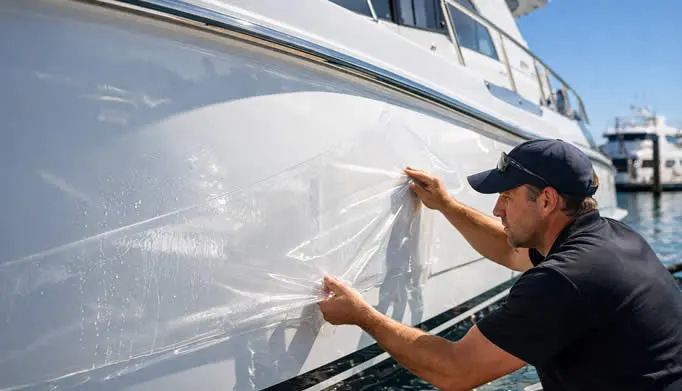
Yacht Armor describes itself as a self-healing marine protection film built specifically for marine environments, and its official materials repeatedly state a 5- to 7-year lifespan with proper maintenance and care. The company also says the film is designed to resist UV damage, oxidation, scrapes, scratches, and normal marine wear.
That matters because not every protection product is solving the same problem. Wax is for short-term shine. Ceramic coating improves cleanability and UV resistance. Yacht Armor is positioned as a physical protective film that sits between your gelcoat or painted surface and the abuse that comes from docks, fish blood, gear contact, sun, and repeated washing.
A second detail that often gets missed is the warranty distinction. The company’s official guarantee page states a 3-year limited warranty against cracking, bubbling, and yellowing, while its marketing and FAQ materials describe a 5- to 7-year expected lifespan. Those are not the same thing, and buyers should understand that difference before installation.
Yacht Armor lifespan
The expected Yacht Armor lifespan is 5 to 7 years, but that range is best understood as a performance window, not a blanket promise that every installation will look identical for that entire period. High-traffic zones, harsh UV, aggressive cleaning habits, and poor prep work can shorten service life sooner than low-exposure, well-maintained installations.
What the 5–7 year claim really means
When brands say “5 to 7 years,” they are usually describing how long the film is expected to remain functionally protective under normal marine use with proper care. That is different from saying it will look brand new forever. Film can still show wear in edges, high-contact areas, or impact-prone zones long before total failure. The official Yacht Armor FAQ explicitly ties longevity to maintenance and care, and reseller materials also point to environment, maintenance, and application quality as the main variables.
Where lifespan tends to be longest
In practice, the longest-lasting installations are usually on surfaces that get:
- consistent rinsing after use,
- less mechanical abuse,
- less chemical exposure, and
- professional installation over well-prepared surfaces.
That aligns with Yacht Armor’s own maintenance guidance, which stresses curing time and proper aftercare, and with installer pages that emphasize certified installation quality.
Where lifespan tends to be shortest
The shortest service life usually shows up on:
- bow or entry points,
- gunwales and cockpit edges,
- heavy fishing-contact areas,
- spots with repeated fender pressure,
- areas washed aggressively with harsh tools or chemicals.
That is not a defect in the concept. It is simply how protective films behave when they are doing their job in impact-prone zones.Visual suggestion: Add a diagram of a sportfish or center console with “high-wear zones” highlighted.
What shortens or extends Yacht Armor’s life?
The biggest factors that affect how long Yacht Armor lasts are UV intensity, salt exposure, traffic and abrasion, installation quality, and maintenance habits. The brand’s own FAQ and installer materials specifically point to environment, maintenance, and application quality as lifespan drivers.
1. UV and climate exposure
A boat kept in South Florida sun year-round lives a harder life than one stored under cover in a milder climate. Yacht Armor states the product is designed for UV-heavy marine conditions, but even UV-stable materials age faster under constant direct exposure than under controlled storage conditions.
2. Installation quality
Film is only as good as the surface underneath it and the way it is installed. Yacht Armor’s warranty language specifically applies to film professionally installed through certified installers. That tells you the manufacturer sees installer quality as central to performance.
3. Surface preparation
This is one of the least glamorous but most important variables. If film is installed over contamination, oxidation, or unresolved surface defects, the end result may look worse and fail sooner. In marine detailing, prep is often the hidden difference between a film job that lasts and one that becomes a problem.
4. Maintenance behavior
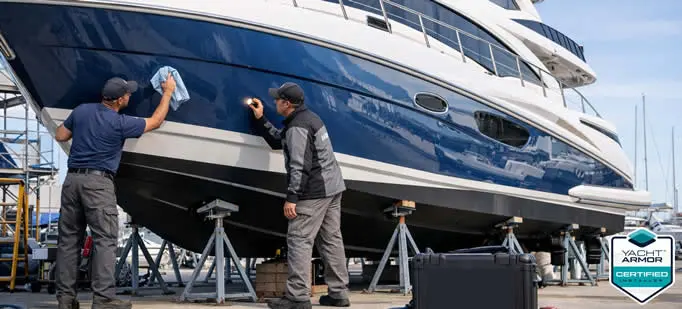
Routine rinsing, correct wash chemistry, and avoiding abrasive tools all matter. Yacht Armor’s maintenance page says the film takes 30 days to fully cure, notes that some setting solution may remain temporarily under the film, and advises owners not to press on these areas while the film is settling.
Want a recommendation based on your boat’s exposure and wear zones? Schedule a consultation →
Yacht Armor maintenance: How Long Does Yacht Armor Last
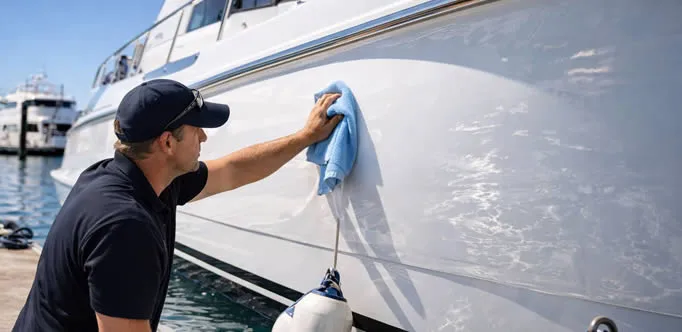
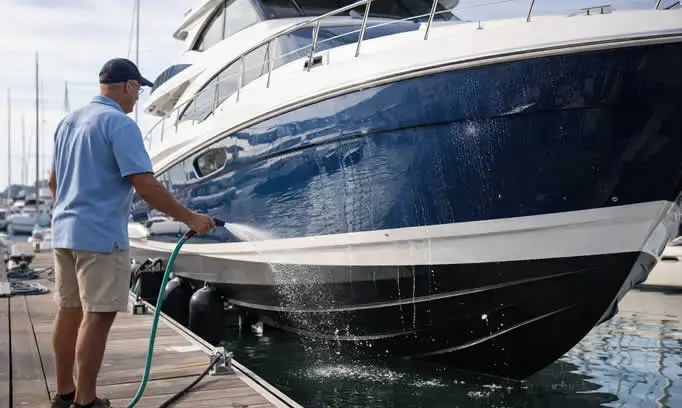
Yacht Armor maintenance is relatively light compared with repeated polishing or waxing, but “low maintenance” does not mean “no maintenance.” To get the longest life out of the film, owners need to respect cure time, rinse regularly, and avoid habits that prematurely damage the surface.
Immediately after installation
The official maintenance page says the film takes 30 days to fully cure. During that time, minor visual variation or trapped solution can be normal, and owners are advised not to press on those areas while they dissipate.
Ongoing maintenance best practices
A practical maintenance routine usually includes:
- Rinse after saltwater use.
- Wash with marine-safe products instead of harsh degreasers.
- Avoid abrasive brushes or aggressive pads on the film.
- Inspect edges and high-contact areas periodically.
- Address any lifting or abnormal wear early, before it spreads.
What maintenance actually buys you
The reason maintenance matters is simple: film longevity is rarely lost all at once. It usually declines progressively through edge abuse, repeated abrasion, trapped contamination, or avoidable chemical damage. Owners who wash correctly and inspect regularly are not just keeping the film cleaner; they are extending the useful performance window the product is designed to deliver.
Visual suggestion: Add a simple “first 30 days after install” care card graphic.
Yacht Armor vs ceramic coating
Yacht Armor and ceramic coating solve different problems, so their lifespan numbers are not directly interchangeable. Yacht Armor is a marine protection film designed to provide a physical barrier against abrasion and wear, while ceramic coating is a bonded liquid coating designed to improve gloss, UV resistance, and ease of cleaning.
The practical difference
If your main problem is:
- dock rash,
- fender scuffs,
- fish blood and high-contact abrasion,
- repeated gear contact,
then Yacht Armor is usually the more relevant solution because it adds a physical protective layer. If your main problem is:
- oxidation,
- water spotting,
- wash time,
- loss of gloss,
then ceramic coating may be the better fit.
Lifespan comparison at a high level
Yacht Armor’s official materials say 5 to 7 years with proper maintenance and care. Ceramic coating lifespans vary heavily by brand and system, but many marine ceramic systems market shorter protection windows than film and focus more on cleanability and UV defense than abrasion resistance.
When the best answer is both
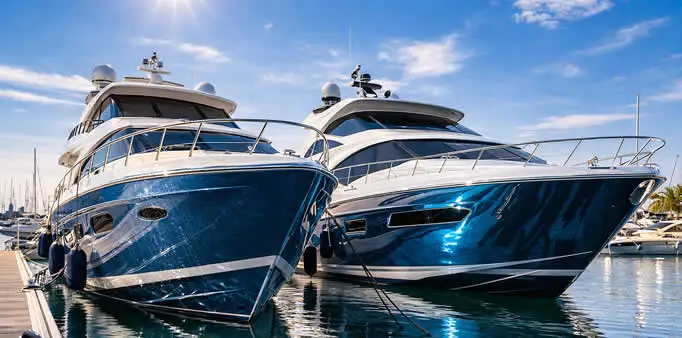
On premium boats, the smartest setup is often not “film or coating.” It is:
- film on high-wear zones, and
- ceramic coating on broader visible surfaces.
That combination lets each product do what it does best instead of forcing one system to solve the wrong problem.
A realistic buying framework: How Long Does Yacht Armor Last
If you are evaluating Yacht Armor, the smartest question is not only “how long does Yacht Armor last?” but also “where on my boat will I get the most value from that lifespan?” That is where most owners make the best decision.
Yacht Armor makes the most sense when:
- you keep the boat in harsh sun,
- you use the boat often,
- you care about protecting gelcoat from repeated contact,
- you are tired of re-correcting the same wear zones.
You may want a different solution when:
- your main issue is cosmetic gloss, not abrasion,
- the boat is lightly used and stored under cover,
- you need the lowest upfront cost rather than the lowest long-term maintenance.
That is why consultation-based recommendations usually outperform generic advice. Protection systems are most effective when they match the actual abuse pattern of the boat.
FAQ: How Long Does Yacht Armor Last
Yacht Armor’s official FAQ says the film lasts 5 to 7 years with proper maintenance and care. The actual result depends mostly on environment, maintenance, and installation quality.
Yes. The official guarantee page states a 3-year limited warranty against cracking, bubbling, and yellowing when the product is professionally installed through certified installers.
The biggest factors are UV exposure, saltwater conditions, abrasion, installer quality, and maintenance habits. Yacht Armor’s FAQ and installer pages explicitly mention environment, maintenance, and application quality.
No. It is a long-term marine protection film, not a permanent treatment. The official guidance frames it as a product that lasts several years, not forever.
The official maintenance guidance says the film takes 30 days to fully cure, and some trapped setting solution can remain temporarily under the film during that period.
They serve different purposes. Yacht Armor provides a physical protective layer against abrasion and wear, while ceramic coating improves gloss, hydrophobic behavior, and easier cleaning.
The warranty specifically addresses cracking, bubbling, and yellowing for 3 years under the stated conditions. That suggests those are known failure concerns the warranty is designed to cover.
Official and installer materials position it for boats and yachts, especially where owners want protection from scrapes, scratches, dock rash, oxidation, and normal wear.
Key Takeaways: How Long Does Yacht Armor Last
- Yacht Armor typically lasts 5 to 7 years with proper maintenance and care.
- The product carries a 3-year limited warranty against cracking, bubbling, and yellowing when installed through certified installers.
- Environment, maintenance, and installation quality are the three biggest factors affecting real-world longevity.
- The film takes about 30 days to fully cure after installation, and some temporary visual variation can be normal during that phase.
- Yacht Armor is best understood as a physical protection system, not just a cosmetic finish product.
- Ceramic coating and Yacht Armor are complementary in many cases because they solve different problems.
Conclusion: How Long Does Yacht Armor Last
If you came here asking how long does Yacht Armor last, the most accurate answer is this: expect 5 to 7 years when the film is professionally installed, maintained correctly, and used in conditions that do not constantly overwhelm high-wear zones. That number is credible, but it is not automatic. Installation quality, curing discipline, and maintenance habits are what turn a marketing claim into a good real-world result.
For the right boat, Yacht Armor can be a smart long-term protection play. The key is applying it where it creates the most value and pairing it with realistic expectations about wear, maintenance, and warranty coverage. If you plan it correctly, you are not just protecting a finish. You are reducing repeat correction, preserving appearance, and making ownership easier over time.
How Long Does Yacht Armor Last? Schedule a Consultation
To get a protection plan built around your boat’s exposure, usage, and high-contact areas.