
How Effective Is Yacht Armor Over Time?
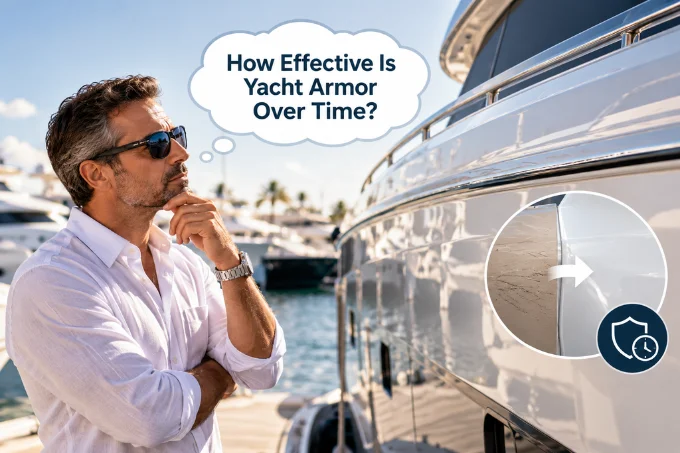
Yacht owners invest heavily in painted and gelcoat surfaces, but keeping those surfaces looking their best requires more than routine washing. UV exposure, saltwater, dock contact, fenders, lines, equipment, and everyday use can gradually affect the appearance of a vessel.
Yacht Armor is designed to provide a protective layer between the vessel’s underlying surface and many of the sources of everyday wear.
But how effective is Yacht Armor over time?
The answer depends on several factors, including where the film is installed, how much exposure the vessel receives, the condition of the surface before installation, cleaning practices, and the type of use the yacht experiences.
For owners considering Yacht Armor, understanding these factors can help determine whether protective film makes sense for a particular vessel and maintenance strategy.
What Is Yacht Armor?
Yacht Armor is a protective film system designed to help protect yacht surfaces from physical contact and everyday environmental exposure.
Rather than relying only on the underlying paint or gelcoat to absorb normal wear, a protective film adds a sacrificial layer over selected surfaces.
This can be especially useful in areas that experience frequent contact, including sections around docking points, rub areas, swim platforms, transoms, and other vulnerable exterior surfaces.
The goal is not to eliminate maintenance. Instead, the film provides another layer of protection that can help preserve the condition of the surface underneath.
How Yacht Armor Protects Yacht Surfaces Over Time
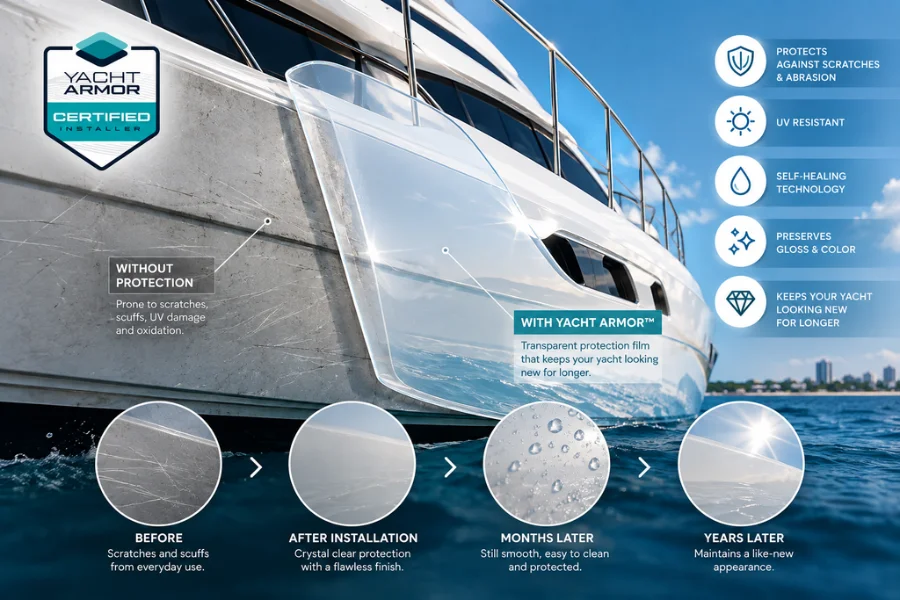
The effectiveness of protective film is closely connected to the type of exposure it receives.
A yacht operating frequently in South Florida may encounter intense sunlight, saltwater, marina activity, dock contact, fenders, lines, and repeated cleaning.
Yacht Armor can help reduce the direct impact of some of these conditions on the protected surface.
Protection From Everyday Contact
Docking and marina operations can create repeated opportunities for contact between a yacht and surrounding surfaces.
Protective film can provide a sacrificial surface in selected areas, helping reduce direct wear on the paint or gelcoat underneath.
Protection From Scratches and Surface Wear
Everyday yacht use can create small scratches and scuffs that accumulate over time.
Installing protective film in high-contact areas can help separate the original surface from some of that physical wear.
Easier Management of High-Wear Areas
Not every part of a yacht experiences the same level of exposure.
Strategically protecting high-contact areas allows owners and maintenance teams to focus protection where it can provide the most practical benefit.
What Determines How Long Yacht Armor Stays Effective?
There is no single lifespan that applies equally to every Yacht Armor installation.
Several variables influence long-term performance.
Vessel Use
A yacht that spends most of its time in a marina may experience different types of wear than a vessel that cruises frequently.
More frequent use can mean more exposure to docking, equipment, cleaning, and physical contact.
Location of the Film
A protected area that experiences frequent contact may require more attention than a surface that receives little physical interaction.
The installation location should therefore be considered when evaluating long-term performance.
Surface Condition Before Installation
Proper preparation is important.
Protective film should be installed on an appropriate, properly prepared surface. Existing contamination, damage, oxidation, or surface imperfections can affect the finished installation.
Cleaning and Maintenance
Regular cleaning helps maintain the appearance of the protected surface.
Maintenance practices should be appropriate for the installed system and the specific vessel environment.
Environmental Exposure
South Florida yachts can experience strong UV exposure, humidity, saltwater, and frequent temperature changes.
These environmental conditions are part of the long-term operating environment and should be considered when planning yacht surface protection.

Does Yacht Armor Need Maintenance?
Protective film is not a substitute for yacht maintenance.
The film itself should be cleaned and cared for appropriately, while the surrounding vessel surfaces should continue to receive normal professional attention.
Routine inspections can also help identify areas where the film has experienced increased wear or where an installation may need attention.
For yacht owners, this creates a more proactive approach: protect vulnerable areas, maintain the protective system, and address issues before they become larger surface problems.
Signs That Yacht Armor May Need Professional Attention
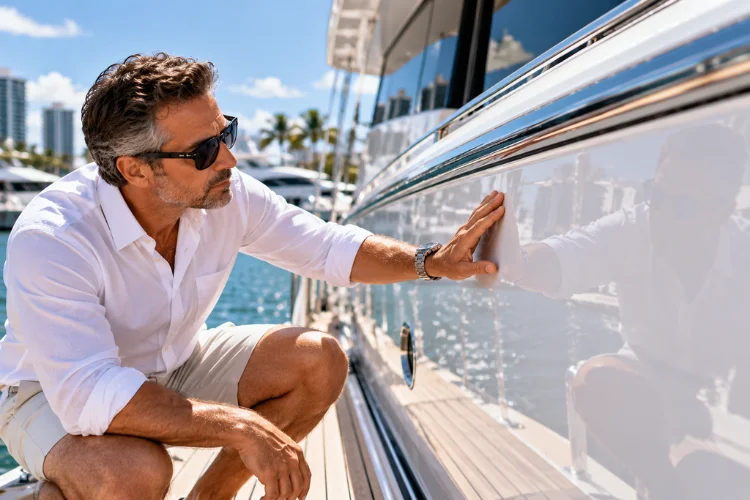
A professional inspection can help determine whether a protective film installation is still performing as intended.
Potential signs that an area deserves attention can include:
- Visible lifting or edge separation
- Significant surface damage
- Heavy wear in high-contact areas
- Changes in the appearance of the film
- Contamination that routine cleaning does not resolve
- Damage caused by docking or equipment contact
- Areas where the underlying surface requires attention
The appropriate response depends on the condition and location of the affected area.
Yacht Armor and Long-Term Yacht Appearance
One of the main reasons owners consider protective film is to help preserve the appearance of valuable painted and gelcoat surfaces.
A yacht’s exterior is continuously exposed to conditions that can gradually affect its appearance.
By adding protection to selected areas, owners can create an additional barrier between those surfaces and everyday sources of wear.
This can become part of a broader yacht maintenance strategy that may include washing, polishing, ceramic coating, paint correction, and other professional services depending on the vessel and its condition.
Yacht Armor vs. Other Marine Protection Options
Yacht Armor is one component of a broader range of marine surface protection options.
Different products and systems are designed for different purposes.
For example, protective film is particularly relevant when the goal is to create a physical barrier against contact and surface wear.
Marine ceramic coatings may instead be used to enhance surface protection and maintenance characteristics on appropriate painted or gelcoat surfaces.
Other marine coating systems may address different requirements.
The right approach depends on the vessel, the surface being protected, the owner’s priorities, and the type of exposure involved.

Why Professional Installation Matters
Long-term performance starts with the installation.
A professional installation process can help ensure that the surface is properly prepared, the film is applied appropriately, and vulnerable areas are identified before installation.
For larger yachts, this becomes especially important because exterior surfaces can vary significantly in shape, material, exposure, and accessibility.
Professional assessment can also help determine where protective film makes sense and where another protection system may be more appropriate.
How Florida Marine Coatings Approaches Yacht Protection
Florida Marine Coatings specializes in professional marine surface protection for boats and yachts.
We are a locally owned Florida company focused on protecting 30–120+ ft boats and yachts across Fort Lauderdale, Miami, Palm Beach, and the wider South Florida region.
Rather than treating every yacht the same, the protection strategy can be based on the vessel’s surfaces, use, exposure, and maintenance requirements.
For owners considering Yacht Armor, a professional consultation can help identify vulnerable areas and determine whether protective film fits into the vessel’s overall maintenance plan.
[ Request a Free Consultation]
How to Get the Most From Yacht Armor Over Time

Owners can support long-term performance by combining protective film with appropriate maintenance.
A practical approach includes:
- Start with proper surface preparation.
- Protect high-contact areas strategically.
- Clean the film regularly using appropriate methods.
- Inspect vulnerable areas periodically.
- Address lifting, damage, or unusual wear promptly.
- Coordinate film protection with the yacht’s broader maintenance program.
The goal is not simply to install protection and forget about it.
The best long-term approach treats Yacht Armor as part of an ongoing yacht care strategy.
Is Yacht Armor Worth Considering for Your Yacht?
The answer depends on how the vessel is used, which surfaces need protection, and the types of exposure those surfaces experience.
For a yacht that regularly encounters docking activity, physical contact, saltwater, UV exposure, and everyday wear, protective film may be worth evaluating as part of a broader surface protection strategy.
A professional assessment can help identify whether Yacht Armor is appropriate for the vessel and which areas may benefit from protection.
Frequently Asked Questions About Yacht Armor Over Time
How effective is Yacht Armor over time?
Its effectiveness depends on factors such as vessel use, installation location, surface preparation, environmental exposure, cleaning, and maintenance. High-contact areas may experience different levels of wear than less exposed surfaces.
Does Yacht Armor prevent all scratches?
No protective film should be treated as a guarantee against all damage. Yacht Armor is intended to provide an additional protective layer that can help reduce everyday surface wear in appropriate areas.
Can Yacht Armor protect yacht paint?
Yacht Armor can be used as a protective layer over appropriate yacht surfaces. The specific application depends on the surface condition and the area being protected.
Does Yacht Armor require maintenance?
Yes. Protective film should still be cleaned and periodically inspected. Proper maintenance can help identify wear or damage that may require professional attention.
Can Yacht Armor be replaced?
When a protected area experiences significant wear or damage, professional evaluation can determine whether the film or affected section should be addressed.
Is Yacht Armor suitable for large yachts?
Protective film can be considered for larger yachts, but the appropriate application depends on the vessel, its surfaces, usage, and protection requirements.
Is Yacht Armor better than ceramic coating?
They serve different purposes. Yacht Armor provides a physical protective film, while marine ceramic coatings are designed for different surface-protection and maintenance objectives. A professional assessment can help determine whether one or a combination is appropriate.
How does Florida weather affect Yacht Armor?
South Florida conditions can expose yachts to strong UV, saltwater, humidity, and frequent use. These environmental factors should be considered when evaluating any long-term yacht protection system.
How can I determine whether Yacht Armor is right for my yacht?
A professional vessel assessment can identify high-contact areas, surface conditions, and maintenance priorities before recommending a protection approach.
Key Takeaways
- Yacht Armor adds a protective layer over selected yacht surfaces.
- Long-term effectiveness depends on vessel use, exposure, installation location, surface preparation, and maintenance.
- High-contact areas may experience more wear than less exposed surfaces.
- Regular cleaning and inspection remain important after installation.
- Yacht Armor can be considered alongside other marine surface protection systems.
- Professional installation and assessment are important for developing an appropriate protection strategy.
- For yachts operating throughout South Florida, a vessel-specific evaluation can help determine where protective film may provide practical value.