Is Ceramic Coating Worth It on Boats? What Owners Should Know
Yes, ceramic coating can be worth it on boats when your goal is easier cleaning, better gloss retention, and stronger resistance to salt, dirt, and UV-related surface wear.
- Introduction: Is Ceramic Coating Worth It on Boats?
- What ceramic coating actually does on a boat
- Best Ceramic Coating For Boats
- Marine Ceramic Coating Benefits
- Where ceramic coating is worth it — and where it is not
- Boat Ceramic Coating Vs Wax
- What Real-World Maintenance Looks Like After Coating
- FAQ: Is Ceramic Coating Worth It on Boats?
- Key Takeaways:
- Conclusion: Is Ceramic Coating Worth It on Boats?
- Is Ceramic Coating Worth It on Boats? Schedule a Consultation
It is not impact protection, and it does not eliminate maintenance, but official marine ceramic coating materials from Glidecoat position it as a hydrophobic, gloss-enhancing system that reduces contaminant adhesion and lowers ongoing upkeep when surfaces are properly prepared first.
Introduction: Is Ceramic Coating Worth It on Boats?
If you are asking if ceramic coating is worth it on boats, you are probably trying to decide whether it is a smart investment or just another premium add-on with good marketing. That is the right question. Boat owners usually do not care about coatings in theory. They care about wash time, oxidation, salt buildup, gloss retention, and whether the result actually lasts long enough to justify the cost.
This page gives you a practical answer. You will see what ceramic coating really does on a boat, where it performs well, where it falls short, and when it is a smarter choice than wax alone.
What ceramic coating actually does on a boat
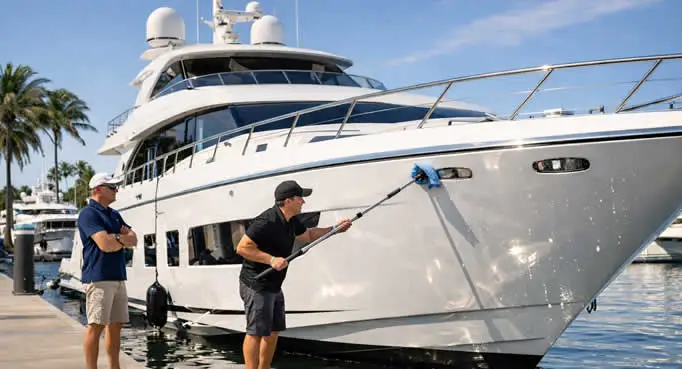
Ceramic coating on a boat creates a bonded surface layer that improves hydrophobic behavior, helps repel dirt and salt, and makes the finish easier to clean and maintain. Glidecoat’s official marine coating pages describe the surface as becoming hydrophobic and super smooth so contaminants like dirt, salt, and fish blood rinse away more easily instead of absorbing into the finish.
That matters because marine finishes live in a punishing environment. Even well-kept boats accumulate salt, airborne contaminants, dock grime, sunscreen residue, and organic buildup. Ceramic coating does not make those things disappear, but it reduces how strongly they bond to the surface, which is why many owners notice easier washdowns first and “showroom gloss” second.
A good way to think about it is this: wax sits on the surface and fades relatively quickly, while a marine ceramic system is designed to bond more tightly and hold up longer under routine boating conditions. Glidecoat’s training and product materials specifically position the coating as a way to reduce or eliminate routine waxing while preserving gloss and lowering maintenance demands.
Best Ceramic Coating For Boats
The best ceramic coating for boats is not simply the one with the strongest marketing claim. It is the one designed specifically for marine surfaces, installed over proper surface preparation, and matched to the way the boat is actually used. Glidecoat’s official materials emphasize marine-specific use on gelcoat, paint, polished metals, and similar surfaces rather than positioning the product as a generic coating copied from automotive applications.
What separates a real marine coating from a generic product
Marine-specific coatings need to do three things well:
- resist UV exposure,
- tolerate salt and contamination,
- and hold up on porous marine finishes like gelcoat.
Glidecoat states that its professional marine ceramic coating uses nano-technology and polymers to fill microscopic pores and scratches on marine gelcoat, marine paint, and polished metal. That is important because boats do not behave like cars. Gelcoat is porous, sun exposure is harsher, and salt contamination is constant.
Why prep matters more than hype
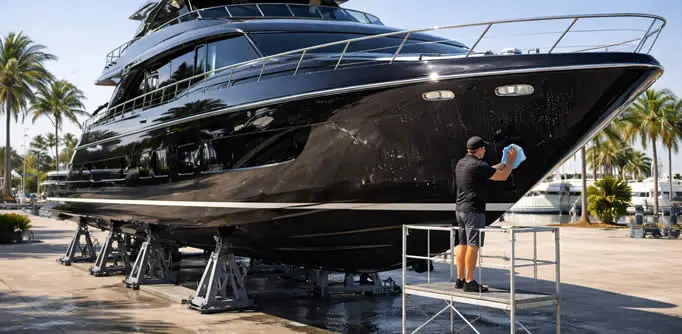
The best coating can still underperform if it is installed over oxidation, chalkiness, or embedded contamination. Glidecoat’s own application content shows that the first steps are washing down the boat and buffing out oxidation before coating. That lines up with what experienced marine detailers already know: coating is not a shortcut around correction. It is a way to preserve correction once the surface is restored.
Practical buying advice
If you are comparing options, ask these questions before you buy:
- Is the coating marine-specific?
- Is the installer doing correction first if needed?
- What maintenance routine is required afterward?
- What surfaces are being coated?
- Is the goal easier cleaning, more gloss, or both?
Those questions usually tell you more than a flashy durability claim.
Marine Ceramic Coating Benefits
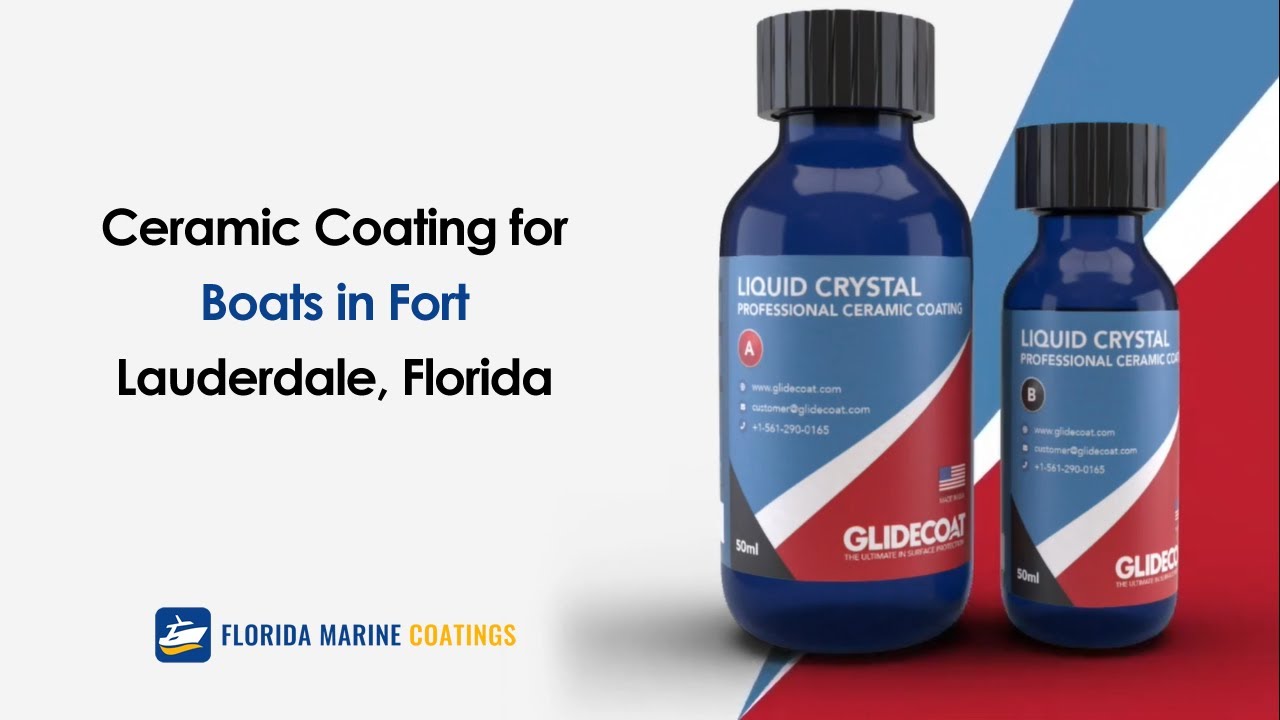
The main marine ceramic coating benefits are easier cleaning, stronger gloss retention, improved hydrophobic performance, and better resistance to salt and environmental contamination. Glidecoat’s official product and professional pages consistently highlight UV protection, restored gloss, hydrophobic behavior, and reduced contaminant absorption as the core reasons boat owners choose the system.
1. Easier washdowns
For many owners, this is the most valuable benefit. A hydrophobic surface allows salt, grime, and fish blood to rinse away faster. That means less scrubbing and less reliance on aggressive chemicals. Glidecoat explicitly describes contaminants sitting on top of the coated surface rather than soaking in, which is exactly what makes ongoing cleaning less labor-intensive.
2. Better gloss retention
Ceramic coating does not create gloss out of nowhere. It preserves and amplifies the gloss that is already there after proper correction. Glidecoat’s product page describes restored color, gloss, and surface hardness, which is why coated boats often look cleaner longer even between details.
3. Lower dependence on waxing
One of the most commercially important benefits is that Glidecoat’s own training materials state that once the professional coating is applied, waxing is no longer required during the life of the coating. That is a meaningful maintenance advantage for owners who are tired of repeating the same wax cycle every few months.
4. Better resistance to UV-related dulling
No coating stops aging forever, but marine ceramic systems are marketed specifically to help slow UV-related degradation and make surfaces easier to preserve. Ceramic Pro’s marine materials also emphasize UV protection and hydrophobicity, which supports the broader marine-industry case for ceramic systems as a maintenance-reduction layer rather than a cosmetic gimmick.
5. More consistent maintenance schedule
Glidecoat’s training materials recommend ongoing maintenance washing every 2–4 weeks and mention periodic topper maintenance on high-sun areas. That type of schedule is useful because it gives owners a realistic care path instead of the false promise of “install once and ignore forever.”
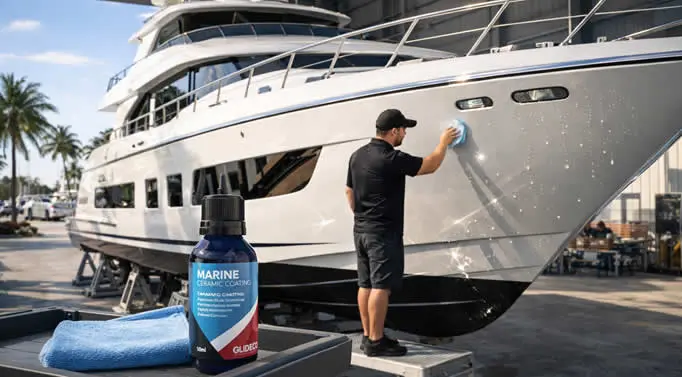
Want the benefits without guessing at prep, product choice, or maintenance? and get a surface-by-surface recommendation
Where ceramic coating is worth it — and where it is not
Ceramic coating is usually worth it on boats when the owner wants easier maintenance, better appearance retention, and a cleaner finish between washdowns. It is less compelling when the owner expects impact resistance, zero maintenance, or a substitute for proper correction. That distinction is where many buying decisions go wrong.
It is worth it when:
- the boat lives in strong sun,
- salt buildup is constant,
- you want to reduce repeated waxing,
- you care about gloss and resale presentation,
- you are already correcting oxidation and want to preserve the result.
It is not the right answer when:
- your main problem is abrasion or dock rash,
- the finish is badly oxidized and you want to skip correction,
- you want a permanent, maintenance-free solution,
- you expect it to replace physical protection film.
For those situations, a different system may be smarter. On some boats, the most effective setup is ceramic coating on visible broad surfaces and protection film on high-contact areas.
Boat Ceramic Coating Vs Wax
Boat ceramic coating and wax are not equal choices for long-term protection. Wax is a short-term cosmetic protectant, while ceramic coating is a longer-term bonded system designed to improve surface performance and reduce maintenance. Glidecoat’s official materials directly state that once the coating is installed, no waxing is required during the coating’s life, which is one of the clearest practical differences between the two approaches.
| Feature | Wax | Boat Ceramic Coating |
|---|---|---|
| Main role | Short-term gloss and surface slickness | Longer-term hydrophobic and maintenance support |
| Longevity | Short | Longer |
| UV resistance | Limited | Stronger |
| Wash efficiency | Moderate | Higher |
| Reapplication frequency | Frequent | Lower |
| Needs correction first? | Recommended | Essential |
Why owners move away from wax
Wax still has a place. It is accessible, lower-cost, and useful for quick cosmetic improvement. But on boats that live outdoors or see frequent salt exposure, wax becomes a repeating maintenance chore. That is why many owners eventually compare the cost of repeated waxing and polishing against a coating system that holds up longer and cuts labor over time. Glidecoat’s own materials are written directly around that value proposition.
Where wax still makes sense
Wax can still make sense when:
- the boat is lightly used,
- the owner prefers short-term upkeep,
- the finish is already kept in controlled conditions,
- or the budget does not justify coating yet.
The important point is not that wax is useless. It is that ceramic coating often becomes worth it when maintenance effort, sun exposure, and finish preservation matter more than lowest initial cost.
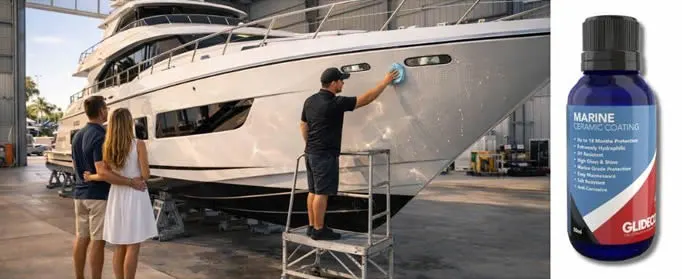
What Real-World Maintenance Looks Like After Coating
Ceramic coating reduces maintenance, but it does not eliminate it. Proper aftercare is one of the main reasons one ceramic-coated boat still looks sharp after a season while another loses performance quickly. Glidecoat’s training material recommends washing the boat every 2–4 weeks and maintaining high-exposure areas on a schedule rather than letting buildup sit on the finish.
A realistic maintenance plan
After coating, good maintenance usually looks like this:
- Rinse with fresh water after use where possible.
- Wash with a coating-safe marine soap on a consistent schedule.
- Avoid harsh cleaners unless truly necessary.
- Dry correctly to reduce spotting.
- Reassess high-sun areas before they visibly degrade.
BoatUS also advises regular fresh-water rinsing to reduce the need for harsher cleaners, and notes that pressure washing can damage certain marine finishes such as bottom paint if used improperly. That supports a broader principle: the gentler and more consistent your maintenance, the longer a protection system usually performs well.
The real value calculation
For many owners, the value of ceramic coating is not just the coating itself. It is the reduction in labor, the lower need for repeated waxing, and the fact that the boat stays “presentation-ready” with less effort. That is why owners who use their boats frequently often see the strongest return from coating even if the upfront spend is higher.
FAQ: Is Ceramic Coating Worth It on Boats?
Yes, ceramic coating is often worth it on boats when the owner wants easier maintenance, better gloss retention, and stronger resistance to salt and environmental contamination. It is most valuable when installed over properly corrected surfaces and followed by a realistic maintenance routine.
Marine ceramic coating lifespan varies by product, prep quality, sun exposure, and maintenance. Glidecoat’s materials describe preservation of the surface for up to 18 months with regular maintenance when applied by a certified pro, while also positioning some systems and topcoat products for longer-lasting protection depending on the package.
It helps slow oxidation and reduces the rate at which UV and contamination degrade the finish, but it does not stop aging forever. Proper correction before coating and consistent maintenance after coating are still essential.
According to Glidecoat’s training materials, once the professional ceramic coating is properly applied, waxing is no longer required during the life of the coating. That is one of the main reasons owners choose ceramic over repeated waxing cycles.
No. Ceramic coating improves hydrophobic behavior, gloss, and wash efficiency. Protection film is a physical barrier meant for abrasion and impact-prone areas. They solve different problems and are often used together on premium boats.
The biggest mistake is applying ceramic coating over oxidation, chalking, or poorly prepared surfaces. The coating preserves the condition underneath it, so surface prep usually determines whether the final result feels premium or disappointing.
Yes. Glidecoat’s official materials say contaminants like dirt, salt, and fish blood can rinse away more easily because they sit on top of the coated surface rather than being absorbed into it. That is one of the clearest day-to-day benefits owners notice.
Key Takeaways:
- Ceramic coating is worth it on boats when you want easier maintenance, better gloss retention, and stronger resistance to salt and contamination.
- The coating works best when applied after proper correction, not as a shortcut around oxidation or dull gelcoat.
- Glidecoat’s official materials position marine ceramic coating as hydrophobic, gloss-enhancing, and maintenance-reducing.
- Glidecoat training documents state that waxing is no longer required after proper application, which is a major value point for active owners.
- Ceramic coating is not impact protection and should not be confused with marine protection film.
- Ongoing maintenance still matters, and official guidance supports regular wash intervals to preserve performance.
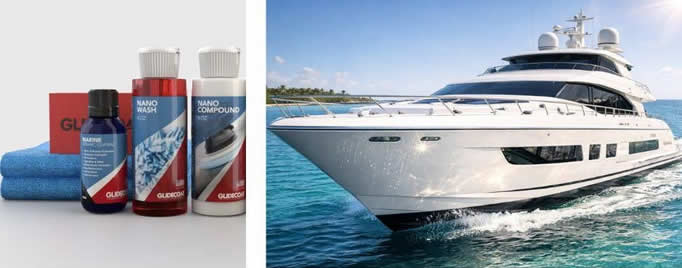
Conclusion: Is Ceramic Coating Worth It on Boats?
For many owners, yes, especially when the real goal is lower maintenance effort, longer-lasting gloss, and better resistance to the things that make boats look older faster. The strongest case for ceramic coating is not hype. It is practical: fewer wax cycles, easier washdowns, and a finish that stays cleaner with less work.
The key is using it for the right reason. Ceramic coating is not a substitute for correction, and it is not a physical shield against impact. But if your boat is already in decent shape—or you are ready to restore it properly first—it can be one of the smartest maintenance-reduction upgrades you make.
Is Ceramic Coating Worth It on Boats? Schedule a Consultation
You now have the framework—next, get a recommendation based on your boat’s finish, storage, and maintenance goals.