What Are Marine Coatings? Types, Uses & Benefits
Coatings are specialized protective layers applied to boats, ships, and marine structures to prevent corrosion, fouling, UV damage, and environmental wear.
- Introduction: What Are Marine Coatings
- What Are Marine Coatings?
- Why Marine Coatings Are Necessary
- Primary Functions of Marine Coatings
- Types of Marine Coatings
- Marine Coating Applications
- Boat Coating Systems: Above vs Below the Waterline
- Waterproof Paint for Metal in Marine Use
- Marine Coatings vs Standard Paint
- How Marine Coatings Fit Into Boat Maintenance
- Real-World Example: Uncoated vs Coated Hull
- Common Misconceptions About Marine Coatings
- How to Choose the Right Marine Coating
- FAQ: What Are Marine Coatings?
- Key Takeaways - What Are Marine Coatings
- Conclusion: What Are Marine Coatings
- Get expert guidance for long-lasting marine protection
Marine coatings are specialized protective layers applied to boats, ships, and marine structures to prevent corrosion, fouling, UV damage, and environmental wear.
Introduction: What Are Marine Coatings
Marine environments are among the harshest operating conditions for any material. Saltwater, sun exposure, humidity, biological growth, and chemical contaminants constantly attack the surfaces of boats and marine structures. Without proper protection, these elements cause corrosion, fading, fouling, and structural deterioration.
This is why marine coatings are essential. If you’ve ever asked what are marine coatings, the answer goes beyond simple paint. Coatings are engineered protection systems designed to extend surface life, improve performance, and reduce maintenance demands. In this article, we’ll explore the different types of coatings, how they work, common marine coating applications, and why solutions like boat coating systems and waterproof paint for metal are critical in marine environments.
What Are Marine Coatings?
These paints, films, or liquid treatments are designed to protect surfaces exposed to harsh marine environments.
Clear Definition
These protective systems are applied to boats, ships, docks, offshore platforms, and marine equipment. Unlike regular paints, they are formulated to resist:
- Saltwater corrosion
- UV radiation
- Biological growth
- Chemical exposure
- Abrasion and impact
Their primary role is functional protection, not just appearance.
Why Marine Coatings Are Necessary
Marine coatings are necessary because unprotected surfaces deteriorate quickly in saltwater environments.
Without marine coatings:
- Metal surfaces corrode rapidly
- Hulls accumulate fouling organisms
- Gelcoat oxidizes and fades
- Maintenance costs increase dramatically
Marine coatings act as a protective barrier that slows these destructive processes.
Primary Functions of Marine Coatings
These protective systems serve four main purposes: corrosion protection, fouling prevention, UV resistance, and surface durability.
1. Corrosion Protection
Saltwater accelerates oxidation, especially on metal surfaces. Coatings isolate the surface from moisture and oxygen, reducing corrosion.
This is especially important for:
- Steel hulls
- Aluminum structures
- Metal fittings and hardware
Waterproof paint for metal is commonly used for this purpose.
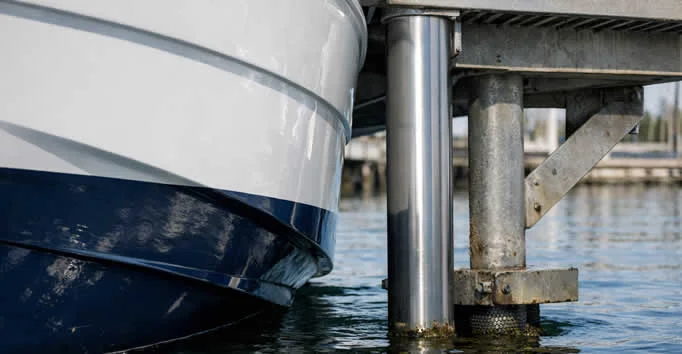
2. Fouling Prevention
Fouling occurs when marine organisms attach to underwater surfaces.
Common fouling organisms:
- Barnacles
- Algae
- Slime layers
Anti-fouling solutions prevent or reduce this buildup, improving vessel efficiency and lowering fuel consumption.
3. UV and Weather Resistance
UV radiation degrades gelcoat, plastics, and paint. Coatings help:
- Preserve color and gloss
- Slow oxidation
- Prevent surface chalking
This is especially critical for boats stored outdoors.
4. Surface Durability
These protective systems guard against:
- Abrasion from docks and lines
- Foot traffic on decks
- Chemical exposure
- Routine cleaning wear
This increases the lifespan of marine surfaces.
Types of Marine Coatings
There are several types of coatings, each designed for specific areas and functions.
Anti-Fouling Coatings
Applied below the waterline to prevent biological growth.
Primary use: Hull bottoms
Key benefit: Reduced fouling and improved performance
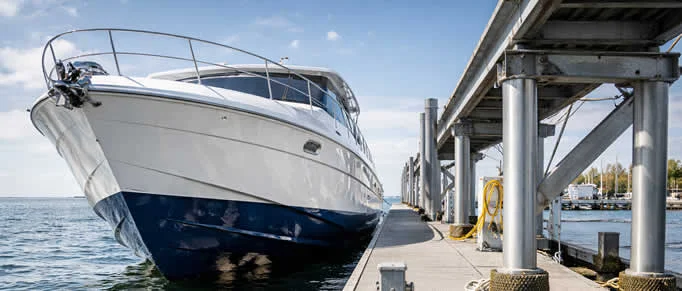
Epoxy and Protective Coatings
Heavy-duty coatings used for corrosion protection on metal and composite surfaces.
Primary use:
- Steel hulls
- Offshore platforms
- Structural components
Key benefit: Long-term corrosion resistance
Polyurethane and Topcoat Systems
Used as finishing layers to provide gloss, UV resistance, and durability.
Primary use:
- Hull topsides
- Superstructures
- Deck surfaces
Key benefit: Appearance and weather resistance
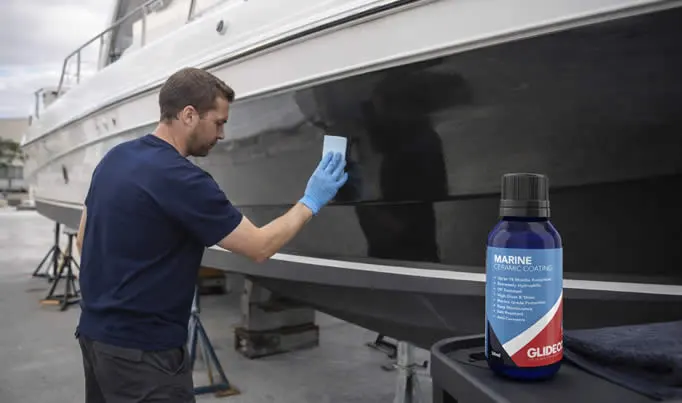
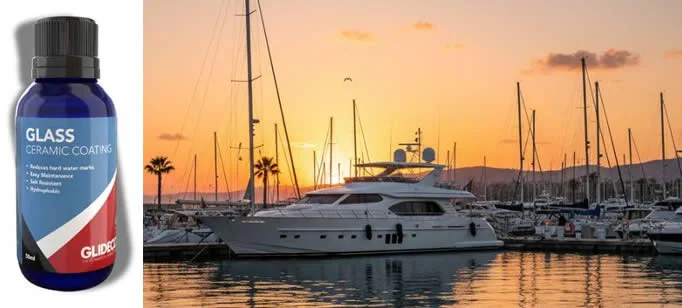
Ceramic Marine Coatings
Advanced liquid coatings that bond to surfaces to enhance gloss, UV resistance, and hydrophobic properties.
Primary use:
- Gelcoat hulls
- Painted surfaces
- Metal and glass
Key benefit: Easier maintenance and appearance preservation
Marine Protection Film
Physical films applied to high-impact areas.
Primary use:
- Bow sections
- Hull sides
- High-wear areas
Key benefit: Impact and abrasion resistance
Marine Coating Applications
Marine coatings are used across multiple surfaces and structures, not just boat hulls.
Common marine coating applications include:
- Boat hull protection
- Deck and superstructure coatings
- Metal hardware and fittings
- Offshore structures
- Dock systems
- Industrial marine equipment
Each application requires a specific type of coating.

Boat Coating Systems: Above vs Below the Waterline
Different coatings are used above and below the waterline due to different environmental challenges.
| Location | Primary Threat | Typical Coating Type |
|---|---|---|
| Below waterline | Fouling, corrosion | Anti-fouling coatings |
| Waterline area | Staining, UV | Hybrid protective coatings |
| Above waterline | UV, oxidation | Ceramic or polyurethane coatings |
| Metal hardware | Corrosion | Waterproof paint for metal |
This layered approach ensures complete vessel protection.
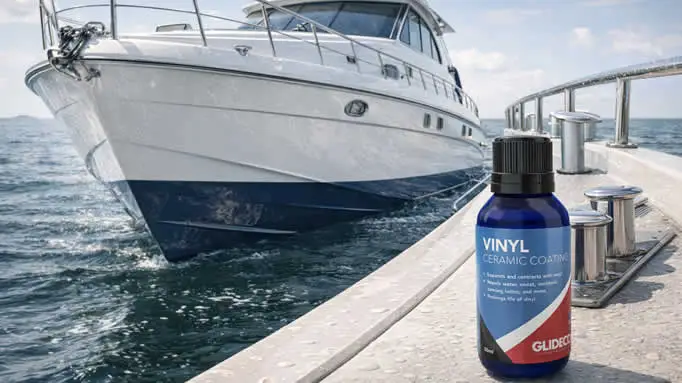
Waterproof Paint for Metal in Marine Use
Waterproof paint for metal is a corrosion-resistant coating designed to protect metal surfaces in wet or saltwater environments.
Common applications:
- Railings
- Cleats
- Engine components
- Structural supports
These coatings prevent rust, extend lifespan, and maintain structural integrity.
Marine Coatings vs Standard Paint
Standard paint is not designed for marine conditions and typically fails quickly in saltwater environments.
| Feature | Standard Paint | Marine Coating |
|---|---|---|
| Saltwater resistance | Low | High |
| UV durability | Moderate | High |
| Fouling protection | None | Yes (specialized) |
| Corrosion resistance | Limited | Advanced |
| Lifespan in marine use | Short | Long |
Using non-marine coatings often results in premature surface failure.
How Marine Coatings Fit Into Boat Maintenance
Marine coatings work best as part of a complete maintenance strategy.
Typical maintenance cycle:
- Boat wash and cleaning services
- Surface inspection
- Repair or correction if needed
- Marine coating application
- Ongoing cleaning and maintenance
Skipping preparation reduces coating effectiveness.
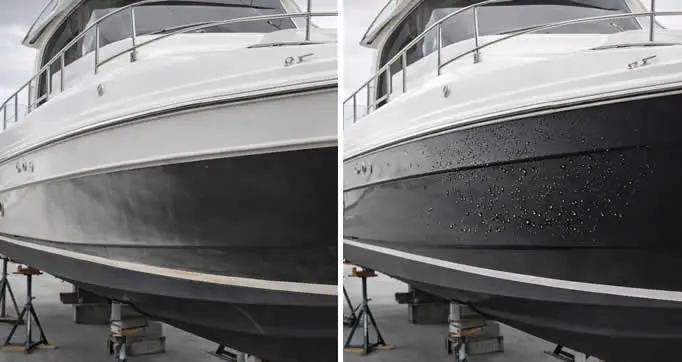
Real-World Example: Uncoated vs Coated Hull
Scenario
Two similar boats stored in saltwater:
Boat A: No protective coatings
Boat B: Proper marine coating system
After One Season
Boat A:
- Heavy fouling
- Oxidation at waterline
- Increased cleaning needs
Boat B:
- Reduced fouling
- Easier washdowns
- Better surface condition
This illustrates the practical value of marine coatings.
Common Misconceptions About Marine Coatings
Many boat owners misunderstand the role of marine coatings.
Common myths:
- “Marine coatings are only for appearance”
- “Any paint works on a boat”
- “Coatings eliminate maintenance”
In reality, marine coatings are protective systems, not cosmetic upgrades.
How to Choose the Right Marine Coating
The right marine coating depends on location, material, and usage.
Key considerations:
- Above or below waterline
- Surface material (metal, fiberglass, wood)
- Storage environment
- Maintenance goals
Professional evaluation ensures the correct system is applied.
FAQ: What Are Marine Coatings?
Marine coatings protect boats and structures from corrosion, fouling, UV damage, and environmental wear.
A boat coating is a protective layer applied to a vessel’s surfaces to improve durability and reduce maintenance.
Common types include anti-fouling coatings, epoxy systems, polyurethane topcoats, ceramic coatings, and Protection Films.
It is a type of marine coating designed specifically to protect metal surfaces from corrosion.
Anti-fouling coatings are specifically designed to prevent marine organism buildup.
It depends on the coating type, environment, and maintenance practices.
Key Takeaways – What Are Marine Coatings
- Marine coatings protect against corrosion, fouling, and UV damage
- Different types serve different marine functions
- Anti-fouling coatings protect underwater surfaces
- Ceramic coatings improve gloss and maintenance efficiency
- Waterproof metal coatings prevent corrosion
- Proper application and maintenance are essential
Conclusion: What Are Marine Coatings
So, what are marine coatings? They are specialized protection systems designed to shield boats and marine structures from corrosion, fouling, UV damage, and environmental wear. From anti-fouling hull coatings to ceramic surface treatments and waterproof paint for metal, these systems play a critical role in maintaining vessel performance, appearance, and structural integrity.
Understanding the types and applications of coatings allows boat owners to make informed decisions that reduce maintenance costs and extend surface lifespan.
Get expert guidance for long-lasting marine protection
Our professional marine coating specialists will assess your surfaces and recommend a customized coating system designed for your vessel, usage, and Florida waters.