What Does Ceramic Coating Do? Benefits for Boats Explained
Ceramic coating forms a durable, hydrophobic layer that helps protect your boat from UV rays, saltwater, oxidation, water spots, and contaminants.
- Introduction: What Does Ceramic Coating Do
- What Is Ceramic Coating?
- How Does Ceramic Coating Work?
- What Does Ceramic Coating Do Protect?
- What Does Ceramic Coating Do? Get Expert Advice
- What Does Ceramic Coating Do? What It Does Not Do
- FAQ: What Does Ceramic Coating Do
- Key Takeaways: What Does Ceramic Coating Do
- Conclusion: What Does Ceramic Coating Do
- What Does Ceramic Coating Do? Protect Your Boat with Professional Application
Introduction: What Does Ceramic Coating Do
Boat owners constantly battle one unavoidable reality: the marine environment is harsh. Saltwater, ultraviolet radiation, humidity, bird droppings, fuel residue, fish blood, and airborne contaminants all begin attacking your boat the moment it leaves the dock. Over time, these elements can dull finishes, accelerate oxidation, and make routine maintenance more time-consuming.
That is why more owners are asking, “What does ceramic coating do?” Professional ceramic coatings have become one of the most popular upgrades for recreational boats, fishing boats, center consoles, sport yachts, and luxury motor yachts because they provide long-term surface protection while making regular cleaning significantly easier.
In this guide, you’ll learn how ceramic coatings work, what they protect, where they deliver the greatest value, and how they compare to other marine protection options.
What Is Ceramic Coating?
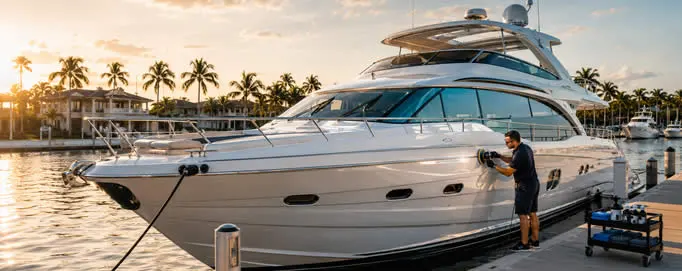
This advanced liquid polymer chemically bonds with properly prepared marine surfaces to create a highly durable protective layer. Unlike traditional waxes that simply sit on top of the finish, ceramic coatings become part of the surface, producing a slick, hydrophobic barrier that resists water, salt, dirt, and many everyday contaminants.
Marine ceramic coatings are specifically formulated for the demanding conditions boats face. They are commonly applied to:
- Gelcoat
- Painted hulls
- Fiberglass
- Stainless steel
- Glass
- Aluminum
- Powder-coated components
- Exterior hard surfaces
The primary purpose is not simply making a boat look shinier—it is protecting the finish while reducing the amount of effort required to keep the vessel looking its best.
How Does Ceramic Coating Work?
This protective coating works by filling microscopic pores and imperfections in the surface, creating an extremely smooth finish that contaminants struggle to adhere to. Water forms tight beads instead of spreading across the surface, carrying away salt, dirt, and other contaminants more efficiently during rinsing.
Because fewer contaminants bond to the surface, owners typically spend less time scrubbing after each outing. This not only saves time but also reduces the amount of friction placed on the finish during routine cleaning.
A professionally installed coating also helps reduce long-term exposure to environmental factors that gradually deteriorate marine finishes.
Some of the biggest environmental threats include:
- Salt deposits
- Ultraviolet radiation
- Acid rain
- Bird droppings
- Fish blood
- Sunscreen residue
- Diesel soot
- Hard water spotting
- Airborne pollution
Rather than allowing these contaminants to bond directly with the gelcoat or paint, the coating acts as the first line of defense.
What Does Ceramic Coating Do Protect?
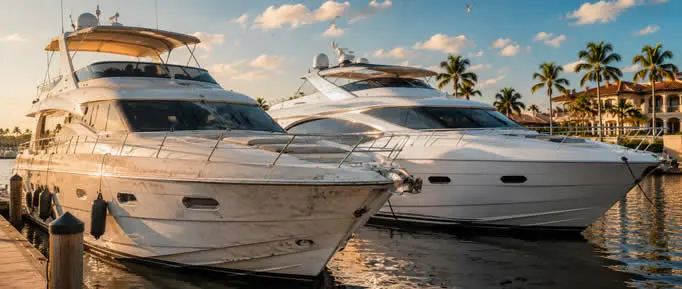
Ceramic coating protects many of the exterior surfaces found on modern boats, particularly those exposed to constant sunlight, saltwater, and repeated washing.
Common protected areas include:
- Hull sides
- Topsides
- Decks
- Console surfaces
- T-tops
- Hardtops
- Swim platforms
- Cockpit fiberglass
- Stainless steel railings
- Cleats
- Glass
- Painted components
It is important to understand that ceramic coating protects surfaces—not structural components. It helps preserve appearance while reducing environmental wear.
Primary Benefits of Ceramic Coating for Boats
Boat owners choose ceramic coatings because they improve both appearance and long-term ownership experience.
Major benefits include:
- Easier removal of salt deposits
- Excellent hydrophobic performance
- Improved gloss retention
- Better resistance to oxidation
- Reduced water spotting
- Simplified routine washing
- UV protection for exterior finishes
- Protection against many environmental contaminants
- Longer-lasting appearance
- Improved resale presentation
Many owners notice that after installing a ceramic coating, regular freshwater rinses become much more effective because dirt and salt release more easily from the protected surface.
What Does Ceramic Coating Do vs. Marine Wax
| Feature | Marine Wax | Ceramic Coating |
|---|---|---|
| Surface Bond | Temporary | Chemical bond |
| UV Protection | Moderate | Excellent |
| Salt Resistance | Moderate | High |
| Water Repellency | Good | Excellent |
| Gloss Retention | Short-term | Long-term |
| Cleaning Effort | Moderate | Easier |
| Reapplication | Frequent | Much less frequent |
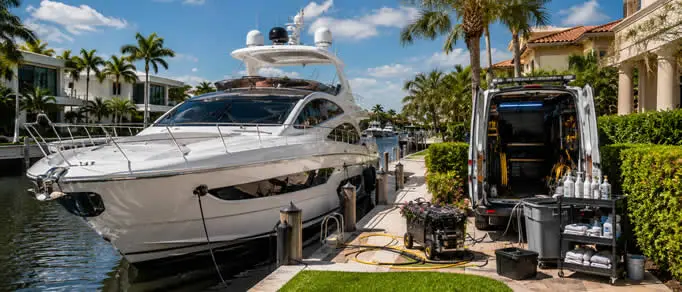
While marine wax still has its place for seasonal care, ceramic coatings provide significantly longer-lasting protection and better performance for boats exposed to frequent saltwater use.
Which Boats Benefit Most from Ceramic Coating?
Nearly every recreational vessel can benefit from ceramic coating, but certain boats experience even greater advantages due to how they are used.
Examples include:
Center Console Boats
Center consoles spend long hours offshore and are exposed to constant salt spray, fish residue, sunscreen, and frequent washdowns. Ceramic coating helps preserve their appearance while reducing cleanup time.
Fishing Boats
Fishing boats encounter some of the harshest contaminants found in boating, including bait residue, fish blood, and heavy salt accumulation. A ceramic coating creates a slicker surface that helps prevent these materials from bonding as aggressively.
Sport Yachts
Large sport yachts feature expansive gelcoat and painted surfaces that benefit from easier maintenance and improved gloss retention. Ceramic coatings also help reduce oxidation caused by South Florida’s intense UV exposure.
Luxury Motor Yachts
Owners of luxury yachts often choose ceramic coating to preserve premium exterior finishes and maintain a consistently polished appearance throughout the boating season.
What Does Ceramic Coating Do? Get Expert Advice
Want to know if ceramic coating is the right protection for your vessel? Schedule a consultation, and we’ll recommend the best solution based on your boat’s size, finish, and how you use it.
What Does Ceramic Coating Do? What It Does Not Do
Ceramic coating provides excellent surface protection, but it is important to understand its limitations. It is designed to protect against environmental damage—not physical impacts.
Ceramic coating does not:
- Prevent deep scratches
- Stop dock rash
- Protect against collisions
- Repair oxidation or faded gelcoat
- Hide existing imperfections
- Replace regular maintenance
- Prevent chips from anchors or fishing gear
Many first-time boat owners assume this protective coating works like a protective film. It does not. Instead, it acts as a sacrificial barrier against contaminants, helping preserve the finish underneath.
If your boat frequently comes into contact with docks, pilings, trailers, or fishing equipment, combining ceramic coating with Yacht Armor® marine protection film may provide more complete protection. This protective coating protects against environmental wear, while Yacht Armor helps absorb physical abrasion in high-contact areas.
Ceramic Coating vs. Yacht Armor
Ceramic coating and Yacht Armor are often compared, but they solve different problems. In many cases, they complement each other rather than compete.
| Feature | Ceramic Coating | Yacht Armor Protection Film |
|---|---|---|
| UV Protection | ✓ Excellent | ✓ Excellent |
| Hydrophobic Surface | ✓ Yes | Limited |
| Easier Cleaning | ✓ Yes | Moderate |
| Salt & Contaminant Resistance | ✓ Yes | Moderate |
| Gloss Enhancement | ✓ Excellent | Minimal |
| Impact Protection | No | ✓ Yes |
| Dock Rash Resistance | No | ✓ Yes |
| Best For | Overall surface preservation | High-contact impact areas |
For many yacht owners, the ideal solution is using this protective coating across exposed exterior surfaces while installing Yacht Armor on vulnerable locations such as:
- Hull sides near docks
- Boarding areas
- Swim platforms
- Bow sections
- Rub rails
- Docking contact points
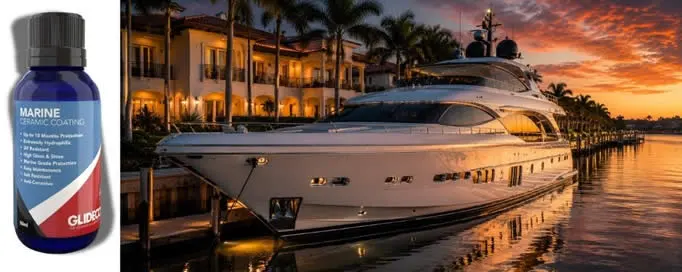
Together, these technologies create a more comprehensive protection strategy.
Maintaining a Ceramic-Coated Boat
Ceramic coating reduces maintenance, but it does not eliminate it. Regular care helps preserve the coating’s hydrophobic properties and keeps the protected surfaces performing as intended.
A recommended maintenance routine includes:
- Rinse the boat thoroughly with fresh water after each saltwater outing.
- Wash using a pH-neutral marine soap.
- Avoid abrasive brushes and harsh cleaners.
- Remove fish blood, bird droppings, and sunscreen residue promptly.
- Dry exterior surfaces when practical to minimize water spotting.
- Schedule periodic inspections to evaluate coating performance.
Because contaminants release more easily from coated surfaces, owners often find that routine cleaning requires less time and less aggressive scrubbing than untreated finishes.
Is Ceramic Coating Worth It?
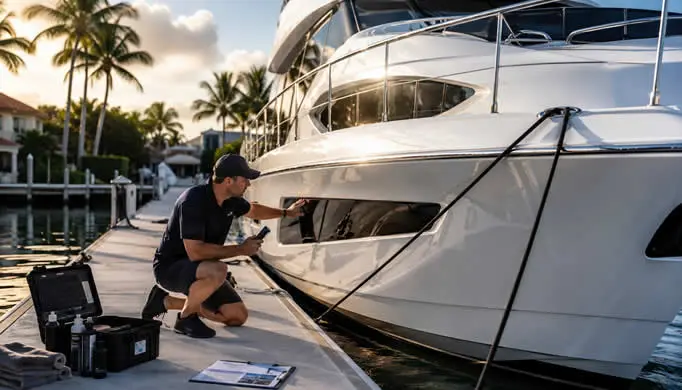
For many boat owners, ceramic coating provides long-term value by helping preserve appearance, simplifying maintenance, and protecting exterior finishes from harsh marine conditions.
It can be especially worthwhile if your boat:
- Is kept in the water year-round
- Lives outdoors
- Is exposed to strong sunlight
- Operates regularly in saltwater
- Receives frequent use
- Has recently undergone gelcoat correction or polishing
- Is maintained for long-term ownership or resale value
Owners who spend less time cleaning often spend more time enjoying their boats. Over the years, preserving the original finish may also contribute to stronger resale appeal.
FAQ: What Does Ceramic Coating Do
Ceramic coating creates a durable protective layer that helps shield exterior surfaces from UV exposure, saltwater, oxidation, water spots, and environmental contaminants. It also makes routine cleaning easier by reducing how strongly dirt and salt adhere to the surface.
Most marine ceramic coatings use advanced nano-ceramic technology that chemically bonds to properly prepared surfaces. These coatings form a durable protective layer rather than sitting loosely on top like traditional waxes.
For long-term protection, ceramic coating generally outperforms traditional marine wax. Wax provides temporary shine, while ceramic coating delivers longer-lasting protection, stronger water repellency, and improved resistance to environmental contaminants.
Ceramic coating helps slow oxidation by reducing UV exposure and limiting contaminant buildup. However, it cannot permanently stop aging or reverse existing oxidation, which should be corrected before coating.
No. Ceramic coating is not designed to prevent deep scratches, dock rash, or impact damage. Boats that require abrasion protection may benefit from adding Yacht Armor protection film to high-contact areas.
Longevity depends on the coating system, installation quality, environmental exposure, and maintenance routine. Professionally applied marine ceramic coatings generally provide significantly longer protection than conventional marine waxes.
Yes. Older boats are excellent candidates provided the surfaces are properly restored before application. Correcting oxidation and imperfections allows the coating to bond effectively and produce the best results.
No. One of its primary benefits is reducing maintenance effort. Regular rinsing, gentle washing, and periodic inspections are generally all that is needed to keep the coating performing well.
Key Takeaways: What Does Ceramic Coating Do
- Ceramic coating creates a durable protective layer that helps defend boats against salt, UV exposure, oxidation, and environmental contaminants.
- Unlike traditional wax, ceramic coating chemically bonds to marine surfaces for longer-lasting protection.
- Ceramic coating simplifies routine cleaning by creating a hydrophobic surface that sheds water, salt, and dirt more easily.
- It protects appearance but does not provide impact resistance or prevent deep scratches.
- Proper surface preparation is essential for maximum coating performance and durability.
- Ceramic coating and Yacht Armor serve different purposes and often work best together as a complete protection strategy.
- Boats that spend significant time outdoors or in saltwater typically experience the greatest long-term benefits.

Conclusion: What Does Ceramic Coating Do
Understanding what ceramic coating does helps boat owners make smarter decisions about long-term surface protection. Rather than simply adding shine, ceramic coating creates a durable barrier that helps reduce oxidation, repel contaminants, simplify cleaning, and preserve the appearance of your boat through years of saltwater exposure.
While it is not a substitute for proper maintenance or physical protection against impacts, ceramic coating has become one of the most effective ways to maintain modern marine finishes. When combined with professional surface preparation and regular care, it helps extend the life of your boat’s exterior while reducing the time and effort required to keep it looking its best.
If you’re considering ceramic coatings for boats or want to determine whether your vessel is a good candidate, schedule a consultation today. We’ll help you develop a protection strategy tailored to your boat, your boating habits, and your long-term ownership goals.
What Does Ceramic Coating Do? Protect Your Boat with Professional Application
Ready to protect your boat with a professional ceramic coating system? Get a quote today and find the right protection plan for your vessel.