What Is Yacht Armor Made Of and How Does It Protect Boats?
Yacht Armor is a marine protection film, a multi-layer thermoplastic urethane, commonly referred to as TPU, designed for marine use.
- Introduction: What Is Yacht Armor Made Of?
- Why the material matters in marine protection
- What Is Yacht Armor Made Of: Yacht Armor Material Composition
- Marine Protection Film For Boats
- Self-Healing Boat Protection Film
- How Yacht Armor is installed and why prep matters
- Why Buyers Should Care About Prep: What Is Yacht Armor Made Of
- What Yacht Armor is not
- What Is Yacht Armor Made Of: Marine Protection Consultation
- FAQ: What Is Yacht Armor Made Of
- Key Takeaways: What Is Yacht Armor Made Of
- What Is Yacht Armor Made Of? Schedule a Consultation
It is built to protect gelcoat and painted surfaces from UV exposure, oxidation, scuffs, staining, and light abrasion, while official brand materials state an expected lifespan of about 5 to 7 years with proper maintenance and care.
Introduction: What Is Yacht Armor Made Of?
Is this just another glossy add-on, or is it a real protective system worth installing on a boat or yacht?
The material itself determines how the film behaves in sun, salt, impact-prone areas, and day-to-day maintenance.
Ready to protect the right surfaces with the right system? Schedule a consultation →

Why the material matters in marine protection
The material matters because a boat protection film has to do much more than look clear and glossy. In real marine use, the film has to tolerate UV exposure, wash cycles, salt, fish blood, dock contact, and general abrasion without yellowing, lifting, or failing early. Yacht Armor’s own materials position it as marine-specific protection intended for exactly those conditions.
That is why boat owners should not treat “film” as a generic category. Different films may look similar in photos, but performance depends on formulation, adhesive behavior, UV stability, and how well the product is matched to a marine environment. Yacht Armor’s brand messaging consistently frames it as purpose-built for boats and yachts rather than adapted from general automotive use, which also ties directly to the question What Is Yacht Armor Made Of.
In practical terms, material composition affects four things owners care about most:
- how well the surface resists scratches and scuffs,
- how well it handles UV and oxidation pressure,
- how natural it looks once installed,
- and how long it stays serviceable before replacement becomes necessary.
What Is Yacht Armor Made Of: Yacht Armor Material Composition
Yacht Armor is described in installer and reseller materials as a marine protection film made from thermoplastic urethane, commonly abbreviated TPU. Official brand pages clearly identify it as a marine protection film, while installer-side educational content describes it more specifically as a multi-layer thermoplastic urethane film designed to conform to hull surfaces and act as a protective barrier.
What thermoplastic urethane means in plain language
TPU is a flexible polymer commonly used in protective film applications because it can be clear, durable, and shape-conforming at the same time. On a boat, that matters because protection film has to follow curves, edges, and compound shapes without creating obvious visual distortion. Third-party installer explanations of marine PPF describe thermoplastic urethane as an ultra-thin but durable layer that can absorb damage before the gelcoat does.
Why That Composition Is Relevant for Boats: What Is Yacht Armor Made Of
The practical advantage of TPU-based film is not just flexibility. It is the combination of:
- clarity,
- conformability,
- scratch resistance,
- and surface sacrificial behavior.
That combination is what makes marine film useful on high-wear areas where owners would otherwise be polishing, repainting, or correcting the same damage repeatedly. The Florida Marine Coatings explainer describes Yacht Armor as a clear protective film built to defend yacht exteriors from UV rays, saltwater corrosion, fuel stains, scuffs, oxidation, and dock rash.
A useful buyer note
It is smart to ask your installer to confirm the exact film system being installed, including film type, adhesive behavior, warranty terms, and expected service life for your specific wear zones, especially when considering What Is Yacht Armor Made Of. It is good procurement practice for any premium marine protection system.
Marine Protection Film For Boats
Marine protection film for boats is a clear physical barrier installed over gelcoat or painted marine surfaces to absorb wear before the underlying finish does. That is the core distinction between film and products like wax or ceramic coating: film is a sacrificial layer designed to take abuse directly.
What problems marine protection film is built to solve
For most owners, marine film is not about “making the boat shiny.” It is about reducing repeat damage in the same vulnerable areas. Installer and brand materials repeatedly frame Yacht Armor around protection from:
- scuffs,
- scratches,
- oxidation,
- staining,
- dock rash,
- and day-to-day marine wear.
That makes it especially relevant on:
- brows,
- hull sides,
- gunwales,
- boarding areas,
- transom corners,
- and cockpit work zones.
A Yacht Armor-related article on sportfishing yacht brows highlights a practical example: some parts of a vessel experience much heavier UV and heat load than others, so strategic film placement can deliver more value than broad but unnecessary coverage.
How It Differs From Ceramic Coating
Ceramic coating improves hydrophobic behavior, gloss retention, and ease of washing. Marine film adds physical resistance to wear. Those are not competing functions. They are different layers of the protection strategy.
| Protection Type | What It Primarily Does | Best Use Case |
|---|---|---|
| Wax or sealant | Adds short-term surface slickness and gloss | Short-term cosmetic upkeep |
| Ceramic coating | Improves cleanability, gloss, and UV resistance | Larger visible surfaces |
| Marine protection film | Adds a sacrificial physical barrier | High-contact, high-wear zones |
That is why premium boats often use both film and ceramic coating together instead of forcing one product to do the other’s job.
What Owners Should Realistically Expect
Yacht Armor’s official FAQ states the film lasts 5 to 7 years with proper maintenance and care, and its guarantee page separately states a 3-year limited warranty against cracking, bubbling, and yellowing. Those two numbers are different because one describes expected service life and the other describes formal warranty coverage.
That distinction is important for buyers. Good film can last for years, but longevity always depends on:
- prep quality,
- installer quality,
- UV intensity,
- maintenance habits,
- and whether the area being protected is exposed to constant impact or abrasion.
Self-Healing Boat Protection Film
Self-healing boat protection film refers to film that can reduce the visible appearance of light surface marks through heat or environmental exposure, helping the surface recover from minor cosmetic marring. Yacht Armor marketing materials and related installer discussions commonly position it as a self-healing marine protection solution, although the precise performance of that feature always depends on the film system, the type of damage, and the conditions.
What “self-healing” really means
Self-healing does not mean the film repairs every cut, puncture, or gouge. In practice, it usually refers to light surface-level marks softening or becoming less visible when exposed to heat, sun, or warm water. That makes the feature useful for daily cosmetic wear, but it does not turn the product into a permanent or damage-proof shield.
Why self-healing matters on boats
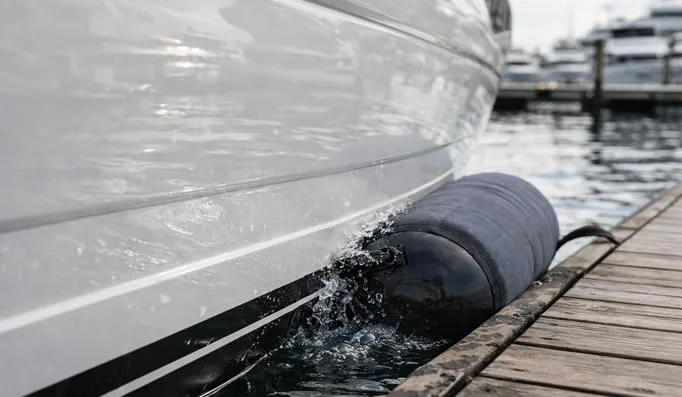
Boats accumulate a different pattern of wear than cars. On boats, small repeated abrasions come from:
- dock lines,
- fenders,
- wash tools,
- tackle contact,
- crew movement,
- and repeated boarding.
A self-healing surface is useful because a lot of marine wear is not catastrophic damage. It is repeated micro-abuse that gradually makes a finish look older than it is. A film that visually recovers from part of that wear helps preserve appearance longer and reduces the need for repeated correction work underneath.
Where expectations need to stay realistic
Yacht Armor’s maintenance guidance says the film takes about 30 days to fully cure, and during that period some visual settling can be normal.
Want help deciding whether film is the right protection system for your hull, brow, or high-wear zones?
Schedule a consultation and get a recommendation built around your boat’s real use pattern→
How Yacht Armor is installed and why prep matters
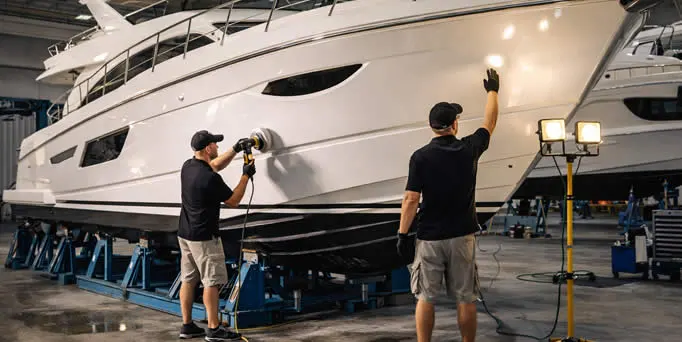
Yacht Armor only performs as intended when the surface underneath it is properly corrected, decontaminated, and prepared before installation. Even the best film will underperform if it is installed over oxidation, trapped contamination, or unresolved finish defects.
The typical installation workflow
A strong installation process usually includes:
- Surface inspection and wear-zone evaluation
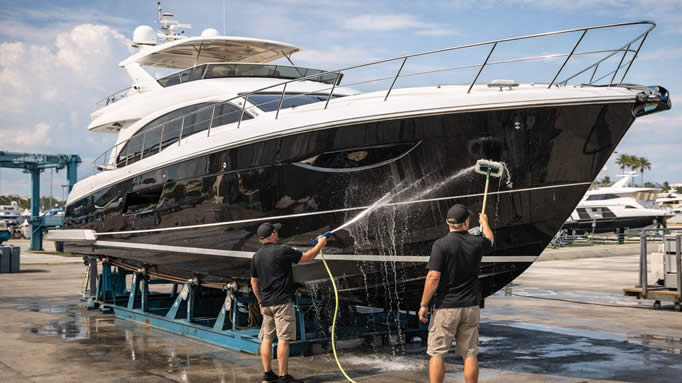
- Wash and decontamination
- Correction or polishing if needed
- Film layout and fitting
- Installation and solution removal
- Curing and aftercare guidance
Installer explanations of marine PPF emphasize that the boat surface must be cleaned thoroughly before film application so contaminants do not interfere with adhesion. Yacht Armor’s own maintenance page reinforces the importance of the cure period after install.
Why Buyers Should Care About Prep: What Is Yacht Armor Made Of
From a commercial standpoint, prep is one of the easiest places for low-quality work to hide. A boat can look good on installation day and still have long-term problems if the film was rushed onto a poorly prepared surface. The real value of a premium install is not just the material. It is the discipline of the process underneath it.
What Yacht Armor is not
Yacht Armor is not wax, not ceramic coating, and not a substitute for all other maintenance. It is a film-based protective system designed to reduce wear and preserve the finish underneath it, but it still needs appropriate washing and care to perform well over time.
This matters because buyers often hear “protection” and assume they are getting a total solution. In reality:
- film helps with physical wear,
- coatings help with cleaning and gloss,
- maintenance keeps both systems performing correctly.
The best installations come from matching the solution to the actual problem—not from expecting one product to solve every marine finish issue at once, which is key when understanding What Is Yacht Armor Made Of.
What Is Yacht Armor Made Of: Marine Protection Consultation
You now know what Yacht Armor is made of—next, get a protection plan built around your boat’s finish, wear zones, and maintenance goals.
FAQ: What Is Yacht Armor Made Of
Yacht Armor is marketed as a marine protection film, and installer-side descriptions identify it as a thermoplastic urethane, or TPU, film system designed for marine surfaces. Official brand materials focus primarily on its marine protection function rather than polymer chemistry details.
Yacht Armor is a film, not a liquid coating. It acts as a physical barrier over the boat’s finish to reduce scuffs, scratches, oxidation, and general wear.
Yacht Armor’s official FAQ states a typical lifespan of 5 to 7 years with proper maintenance and care. Real-world results depend on exposure, wear, and installation quality.
Yes. The official guarantee page states a 3-year limited warranty against cracking, bubbling, and yellowing under the stated terms.
Yacht Armor is commonly described in related marketing and installer discussions as a self-healing marine protection film, meaning it can help reduce the visible appearance of light surface marring under the right conditions. It should not be interpreted as protection from every type of damage.
It can sometimes be installed after proper correction, but film should not be applied over unresolved surface defects if the goal is a high-quality result. Surface preparation is one of the biggest drivers of performance and appearance.
Ceramic coating is a bonded liquid layer that improves gloss, wash efficiency, and UV resistance. Yacht Armor is a physical film designed to absorb wear and protect the finish from contact-related damage.
Key Takeaways: What Is Yacht Armor Made Of
- Yacht Armor is a marine protection film, and installer materials describe it as a TPU-based thermoplastic urethane film system.
- Its job is to protect boat and yacht finishes from UV exposure, oxidation, scuffs, staining, and light abrasion.
- Official brand materials state an expected lifespan of 5 to 7 years with proper maintenance and care.
- The official guarantee separately states a 3-year limited warranty against cracking, bubbling, and yellowing.
- Film works best on high-wear areas where repeated contact would otherwise damage gelcoat or paint.
- Preparation quality and installer quality are two of the biggest factors affecting long-term performance.
What Is Yacht Armor Made Of? Schedule a Consultation
To find out whether Yacht Armor is the right fit for your boat, your finish, and your highest-wear areas.