Yacht Armor Screen Protector for Marine Displays
A Yacht Armor screen protector is a marine-grade protective film designed to shield yacht and boat displays from scratches, UV exposure, glare, fingerprints, and saltwater damage.
- Protect the Most Used Screens on Your Yacht
- What Is a Yacht Armor Screen Protector?
- Marine Touchscreen Protection Film for Harsh Conditions
- Why Marine Screens Fail Faster in Florida
- Boat Navigation Screen Protector Solutions
- What Makes Yacht Armor Different From Standard Screen Films?
- Why Yacht Owners Install Screen Protection Early
- Installation Process for Yacht Armor Screen Protectors
- How Long Does a Marine Screen Protector Last?
- FAQ: Yacht Armor Screen Protector
- Key Takeaways: Yacht Armor Screen Protector
Unlike standard consumer screen films, marine screen protection is engineered specifically for harsh marine environments where sunlight, humidity, vibration, and constant cleaning quickly wear down expensive navigation and helm electronics.
Professional installation helps preserve screen clarity, touchscreen responsiveness, and long-term display value while reducing replacement costs for multifunction displays, chartplotters, and control panels.
Protect the Most Used Screens on Your Yacht
Modern yachts depend heavily on electronics. Multifunction displays, navigation screens, engine monitors, fish finders, and digital switching systems are constantly exposed to sun, salt, cleaning chemicals, and repeated touch interaction.
Without protection, marine displays slowly develop:
- Fine scratches
- Glare issues
- UV haze
- Fingerprint buildup
- Surface wear from microfiber cleaning
- Reduced visibility during navigation
That is exactly where a Yacht Armor screen protector becomes valuable. Instead of replacing expensive electronics prematurely, yacht owners can preserve display performance and appearance with marine-specific protective film solutions.
What Is a Yacht Armor Screen Protector?
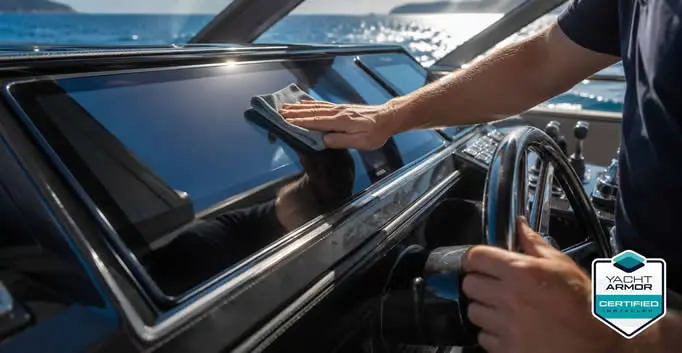
A Yacht Armor screen protector is a precision-cut marine protection film applied directly to navigation displays and touchscreen electronics. It acts as a sacrificial protective layer that absorbs wear before the actual screen surface becomes damaged.
Unlike inexpensive tablet protectors, marine-grade protection films are designed specifically for:
- UV resistance
- Salt exposure
- High heat environments
- Frequent washdowns
- Marine cleaning products
- Helm glare reduction
The goal is simple: preserve visibility, touchscreen functionality, and resale condition.
Many yacht owners invest heavily in ceramic coating, Yacht Armor hull protection, and detailing while overlooking the electronics they touch every day. Yet marine displays are among the most expensive and difficult components to replace on modern vessels.
Marine Touchscreen Protection Film for Harsh Conditions
Marine touchscreen protection film is built for conditions that destroy standard screen protectors quickly. Boats experience continuous UV exposure, heat cycling, salt residue, vibration, and moisture intrusion that typical consumer films are not designed to handle.
Professional marine-grade films provide:
- Optical clarity
- Anti-glare performance
- UV filtering
- Hydrophobic surface behavior
- Reduced fingerprint visibility
- Scratch resistance
- Bubble-resistant adhesion
This matters significantly in places like Fort Lauderdale and Palm Beach where electronics remain exposed year-round.
Why Marine Screens Fail Faster in Florida
Florida conditions accelerate display wear dramatically. UV exposure combined with salt air slowly damages coatings already applied by manufacturers.
Common problems include:
- Clouding around edges
- Surface haze
- Permanent microfiber swirl marks
- Reduced touchscreen sensitivity
- Hard-to-clean fingerprint oils
- Reflection issues during daylight operation
A properly installed Yacht Armor screen protector creates an additional protective barrier that absorbs this abuse instead of the actual display.

Boat Navigation Screen Protector Solutions
Boat navigation screen protector systems are commonly installed on:
- Garmin displays
- Simrad systems
- Furuno electronics
- Raymarine screens
- Engine monitoring systems
- SeaKeeper control displays
- Digital switching panels
- Helm touchscreens
These systems are expensive to replace and essential during operation.
Helm Displays
The helm receives direct sunlight and constant interaction. It is typically the highest-wear electronic area on a vessel.
Flybridge Electronics
Upper helm stations experience significantly more UV exposure and airborne contamination.
Engine Room Monitoring Screens
These screens face heat, vibration, and cleaning exposure.
Salon Control Panels
Interior systems still accumulate fingerprints and cleaning wear over time.
What Makes Yacht Armor Different From Standard Screen Films?
Most low-cost screen protectors are designed for indoor consumer electronics. Marine protection requires a completely different level of durability.
| Feature | Standard Screen Film | Yacht Armor Marine Film |
|---|---|---|
| UV Resistance | Limited | High marine-grade UV resistance |
| Salt Exposure | Poor | Engineered for marine conditions |
| Optical Clarity | Moderate | High-definition clarity |
| Heat Resistance | Consumer-grade | High-temperature stable |
| Cleaning Durability | Low | Designed for repeated washdowns |
| Glare Reduction | Minimal | Marine anti-glare optimization |
| Lifespan | 6–12 months | Multi-year durability |
Professional marine films are also precision-cut to avoid interference with screen edges, controls, and visibility.
Why Yacht Owners Install Screen Protection Early
The best time to install screen protection is before visible wear appears. Once scratches or UV haze develop, protective film cannot reverse the damage already done.
Experienced yacht owners typically install protection:
- During new yacht delivery
- After electronics upgrades
- During refits
- After replacing damaged displays
- Alongside ceramic coating or Yacht Armor exterior film services
A large multifunction display replacement can easily cost several thousand dollars once labor, calibration, and downtime are included.
By comparison, professionally installed marine screen protection costs significantly less while helping preserve:
- Visibility
- Appearance
- Touch response
- Long-term resale value
This becomes especially important on vessels with multiple integrated displays.
Installation Process for Yacht Armor Screen Protectors
Professional installation ensures proper adhesion, visibility, and long-term durability.
Step 1: Screen Inspection
The display is inspected for:
- Existing scratches
- Surface contamination
- UV damage
- Edge wear
Step 2: Surface Preparation
The screen is carefully cleaned using marine-safe products that remove:
- Salt residue
- Fingerprints
- Oils
- Cleaning chemicals
Step 3: Precision Film Installation
The protection film is aligned and installed using controlled techniques that minimize:
- Dust contamination
- Air bubbles
- Edge lifting
Step 4: Final Inspection
The installer verifies:
- Optical clarity
- Touchscreen response
- Edge adhesion
- Visibility under lighting
Yacht Armor Installer in Florida
Your navigation systems are some of the most expensive electronics on the vessel. Protect them before wear becomes permanent.
How Long Does a Marine Screen Protector Last?
A high-quality marine screen protector can last several years depending on:
- UV exposure
- Cleaning frequency
- Screen location
- Usage intensity
- Installation quality
Helm displays exposed to direct Florida sunlight may require replacement sooner than interior salon systems.
Signs It May Need Replacement
- Edge lifting
- Surface haze
- Visible scratches in the film
- Reduced clarity
- Adhesion failure
The advantage is that the protector absorbs damage instead of the actual display underneath.
FAQ: Yacht Armor Screen Protector
A Yacht Armor screen protector shields marine electronics from scratches, UV exposure, fingerprints, salt residue, and cleaning wear while maintaining screen clarity and touch functionality.
Yes. Marine-grade films are designed specifically for UV, saltwater, humidity, and high-temperature environments that quickly damage consumer-grade screen protectors.
Yes. Many marine films include anti-glare properties that improve daytime visibility and reduce harsh reflections.
Most professional marine screen protectors last multiple years depending on exposure conditions and maintenance practices.
Properly installed marine films maintain normal touchscreen responsiveness and functionality.
Yes. Professional-grade films are removable and replaceable without damaging the underlying display when removed correctly.
Most navigation displays, chartplotters, engine monitors, and touchscreen control systems can receive protection film.
Yes. Precision alignment, dust control, and proper adhesion are critical for marine electronics protection.
Key Takeaways: Yacht Armor Screen Protector
- Yacht Armor screen protectors help preserve expensive marine electronics from UV, scratches, and salt exposure.
- Marine-grade films are engineered specifically for harsh boating environments.
- Professional installation improves clarity, adhesion, and long-term durability.
- Screen protection reduces glare and simplifies ongoing cleaning.
- Helm displays and flybridge electronics benefit most from marine protection film.
- Preventive protection costs far less than replacing damaged navigation systems.
Marine electronics represent a major investment on modern yachts, yet they are constantly exposed to some of the harshest environmental conditions possible. UV exposure, salt residue, repeated cleaning, and constant interaction slowly wear down display surfaces over time.
A professionally installed Yacht Armor screen protector helps preserve visibility, touchscreen performance, and overall display condition while reducing long-term maintenance and replacement costs. For yacht owners operating in Florida and other high-exposure marine environments, proactive protection simply makes practical sense.
Ready to protect your marine electronics?
Get a quote for Yacht Armor screen protection services today